
Last updated November 15, 2026
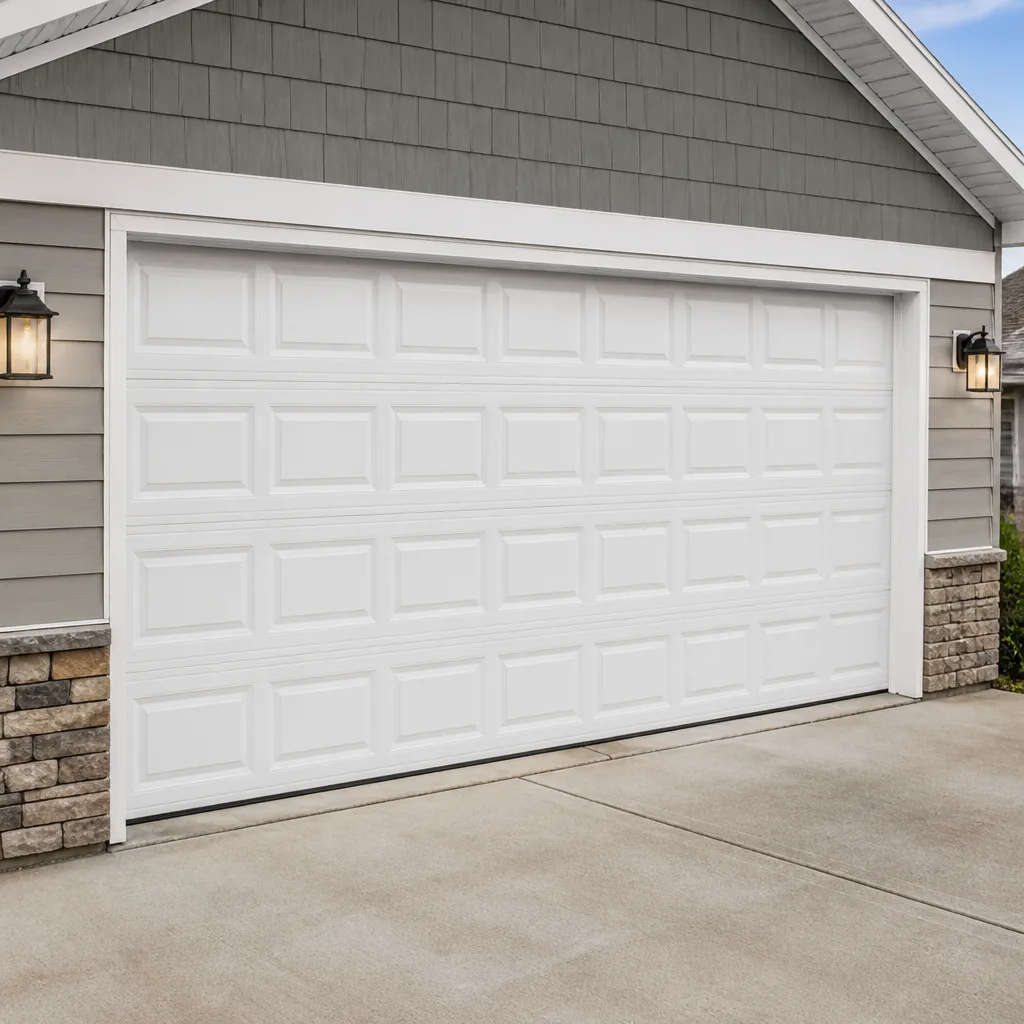 Raised-panel steel
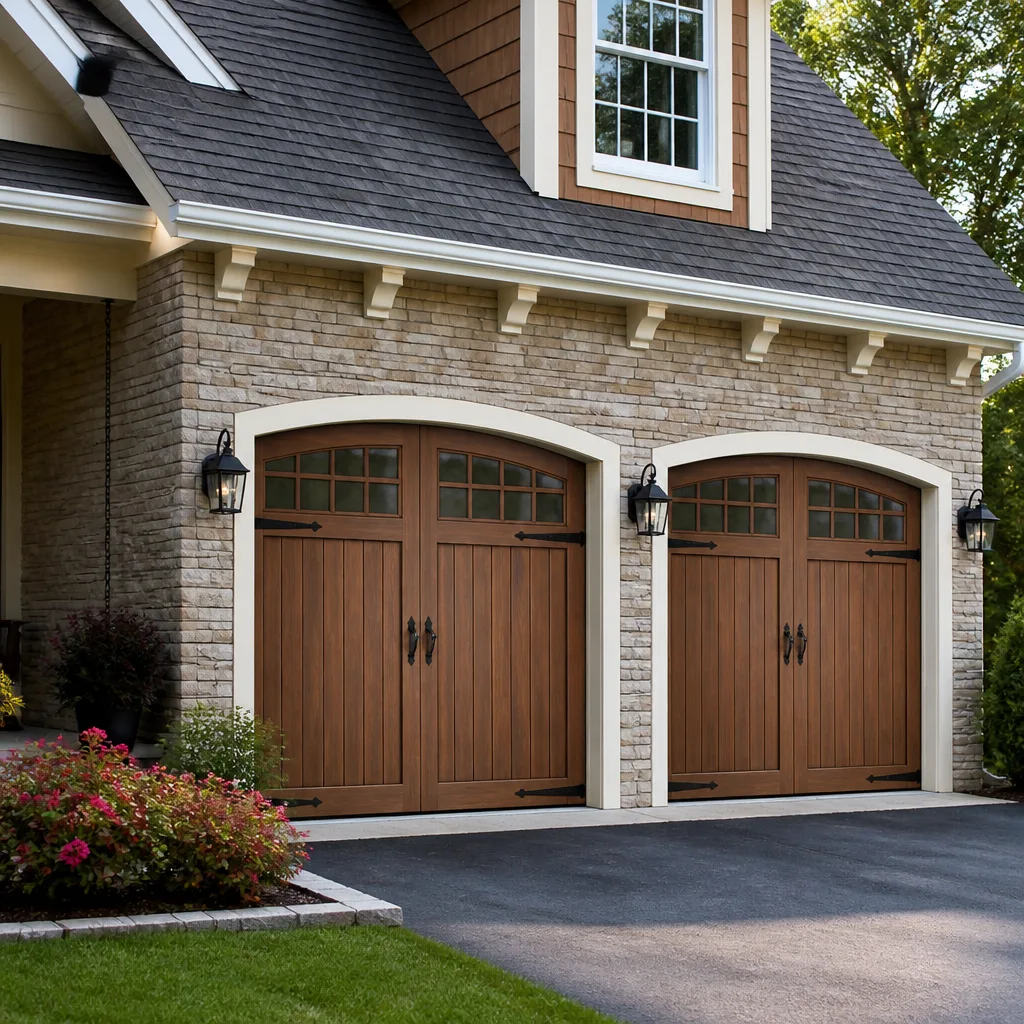 Carriage house
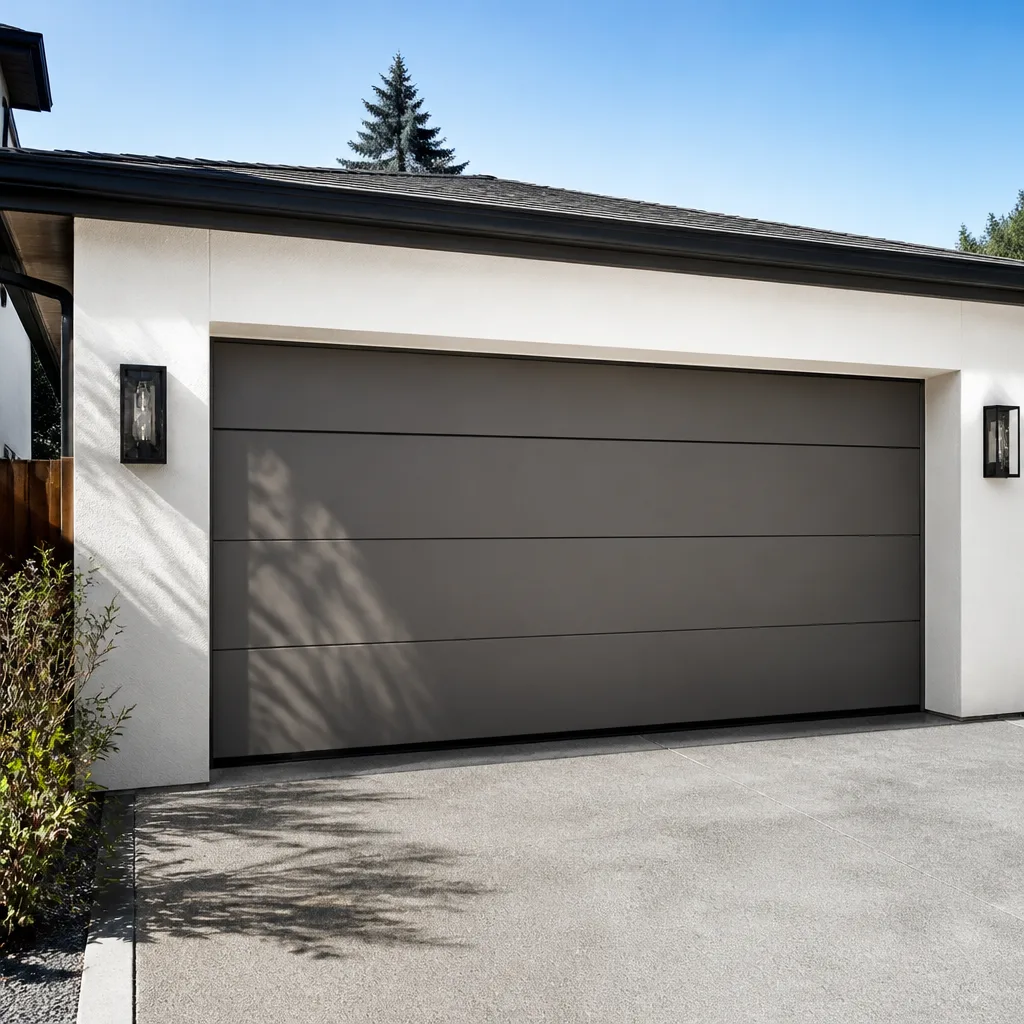 Modern flush
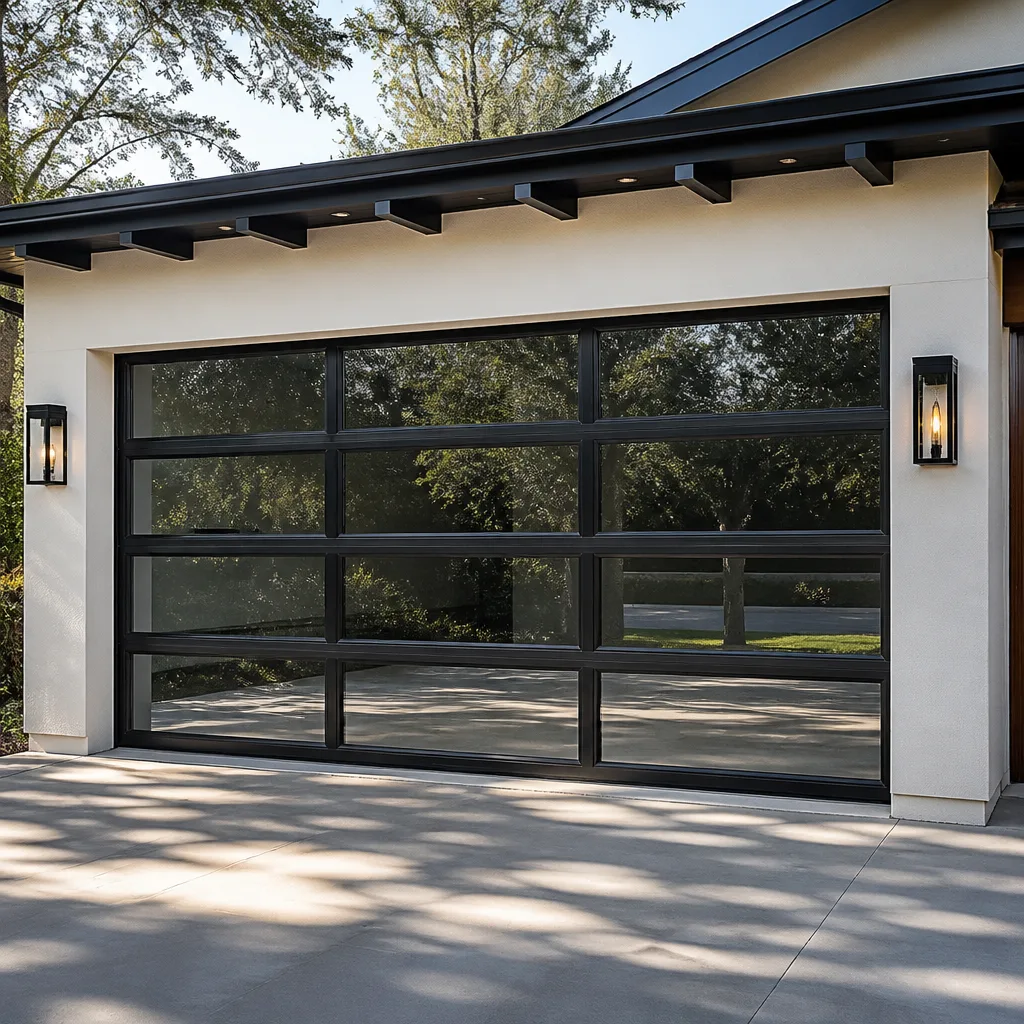 Full-view glass
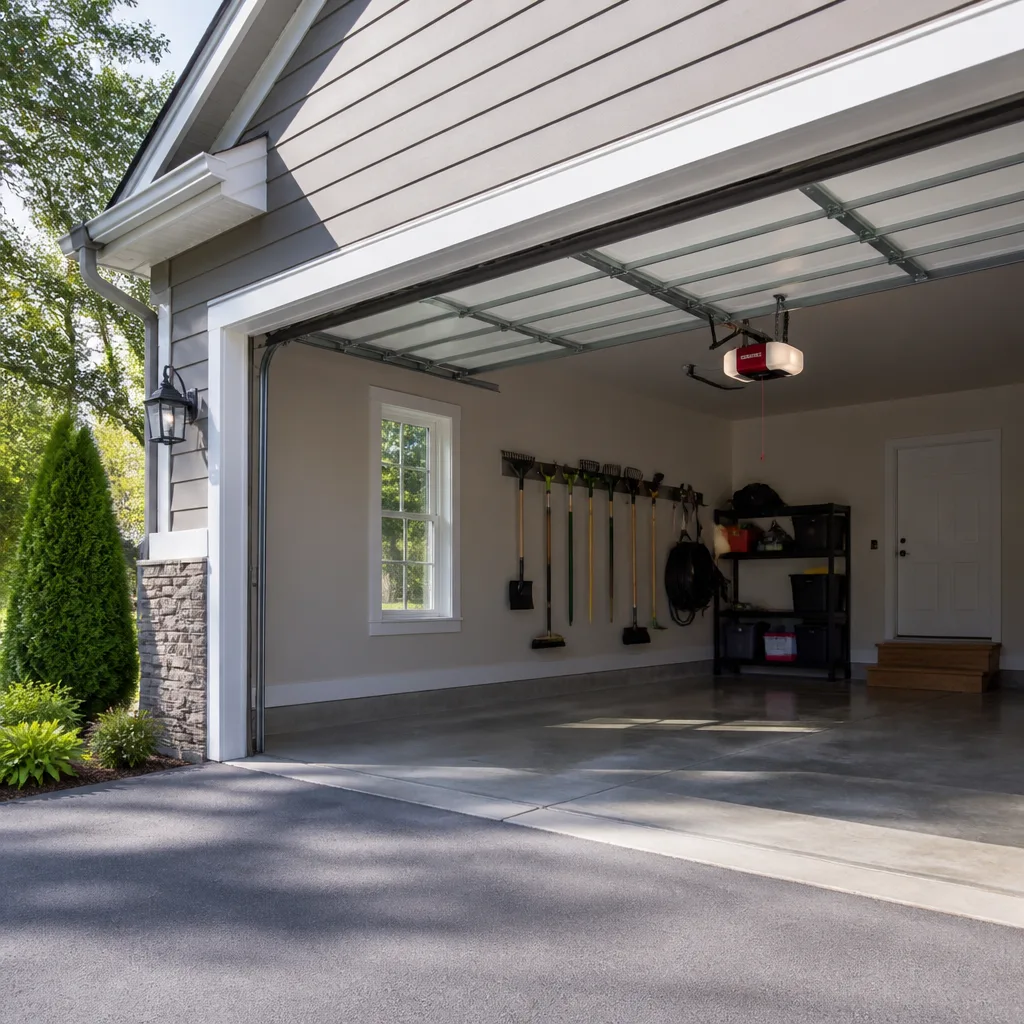 LiftMaster openers
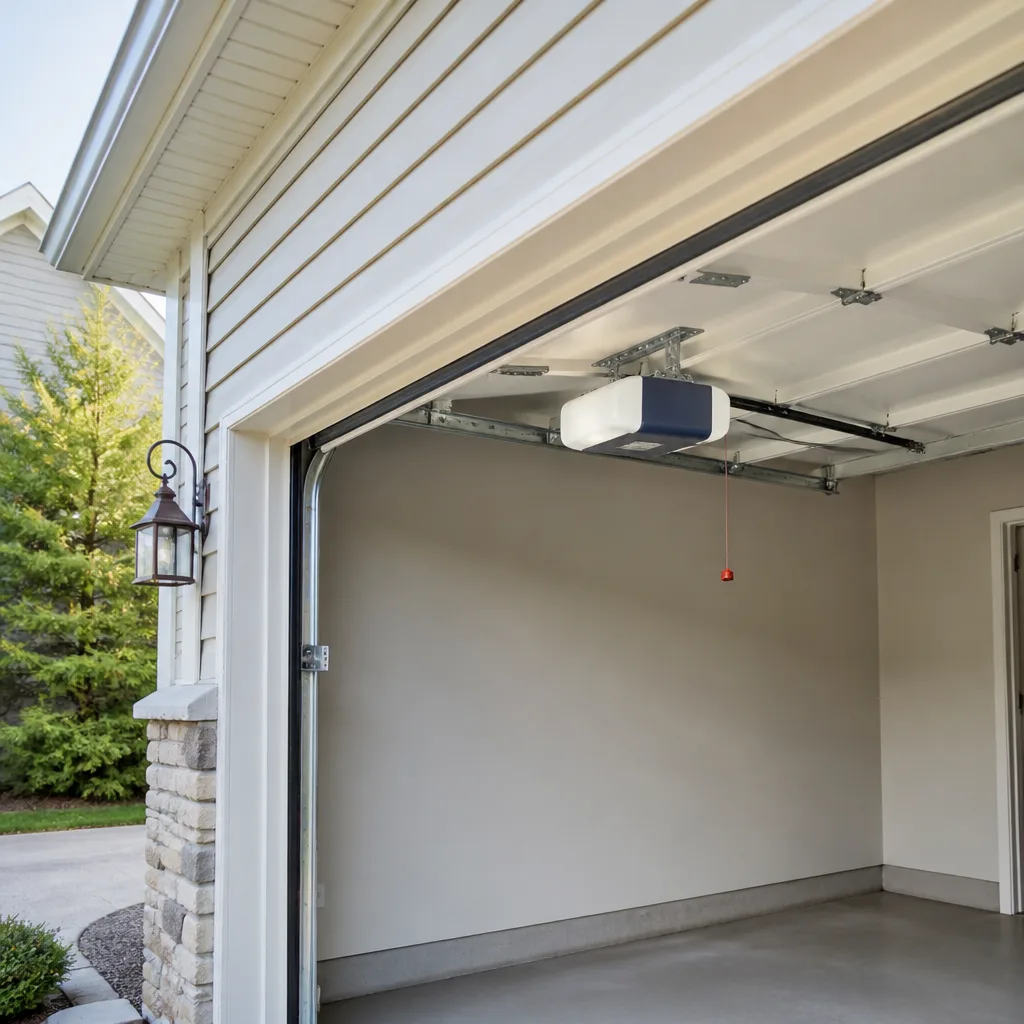 Chamberlain openers
Full 25-point door and opener safety check with every visit - springs, cables, rollers, tracks, and your LiftMaster or Chamberlain opener included
You get a price before we start. It does not change when the pro arrives.
Get your free estimateThe Complete Guide to Garage Doors in El Paso
Most garage door guides are written for climates with rain and humidity. El Paso gets neither, but it does get more than 300 sun days a year and temperature swings that can run from a cold desert night to a 100°F afternoon. That combination wears out garage doors and openers in ways a generic guide never mentions. Steel panels fade and chalk. Vinyl seals bake brittle. Torsion spring coatings break down fast under constant UV. Add caliche and adobe soil that shifts under a garage slab, and the door that worked fine when it was installed starts to bind, sag, and wear unevenly. This guide maps every major decision, from identifying your brand to choosing a new door, against those El Paso conditions.
Quick Answer
A garage door in El Paso should be chosen and maintained for sun, heat, and soil movement rather than rain and snow. That means UV-resistant finishes, springs that are spec’d for heavy daily cycling, and a yearly balance and track check because caliche soil can shift a slab over time. Servicing the door and the opener together, and staying ahead of seal and spring wear, extends the life of the whole system far more than any single repair.
Styles & brands we work with
- Raised-panel steel
- Carriage house
- Modern flush
- Full-view glass
- LiftMaster openers
- Chamberlain openers
Table of Contents
- How Sun and Heat Wear Out an El Paso Garage Door
- Why Local Soil Moves Your Garage Floor and Door
- How to Read Your Garage Door Nameplate
- Brand Lines, Local Stock, and Repair Timelines
- Full-View Aluminum vs. Steel Panels in Desert Wind
- Choosing and Servicing Opener Technology
- A Seasonal Maintenance Routine That Fits El Paso
- When to Repair and When to Replace
How Sun and Heat Wear Out an El Paso Garage Door
Sun does most of the damage here. The door face that gets direct afternoon light in El Paso takes constant UV, and that breaks down materials from the outside in. Understanding which materials fail first helps you catch problems before they turn into a full replacement.
Steel doors are common, and the gauge matters. Thinner panels dent and oil-can more easily, and their factory paint chalk and fade sooner under strong sun. Thicker steel holds its finish longer and resists the daily expansion and contraction that comes with wide temperature swings. You can’t change the gauge after the fact, so look at it before you buy a new door.
Vinyl and rubber weather seals are the first thing to go. They sit at the bottom and sides of the door, bake in the heat, and turn stiff or crumbly. A cracked bottom seal lets dust and pests in and lets conditioned air out. Replacing seals is inexpensive and worth doing every couple of years here.
Torsion spring coatings take the hidden beating. The spring is inside the garage, but the door’s finish and the metal fatigue that comes from daily cycling do the work. Heat speeds up metal fatigue, and a spring that would last longer in a mild climate can fail faster in a hot garage. That’s a reason to have springs checked, not just replaced after they break.
- Chalking and fading: the sign your steel finish is losing its UV resistance.
- Brittle seals: cracked bottom and side seals that no longer seal.
- Binding panels: a door that rubs because heat has warped or loosened a section.
- Spring sag: a door that feels heavier or drops faster than it used to.
Many El Paso garages face west or south and catch the worst of the afternoon sun, so the finish on that side ages faster than the rest of the door. If that’s your setup, plan on inspecting seals and finish more often than a neighbor whose door faces north. Our technicians have up to 8 years of experience diagnosing which part of a door is wearing from sun versus from a mechanical fault.
Why Local Soil Moves Your Garage Floor and Door
Caliche is a hard, cement-like layer in the soil across much of El Paso, and adobe-heavy dirt behaves differently. Both can shift with moisture and heat, and that movement shows up at the garage slab. When the floor settles or rises unevenly, the door’s alignment goes with it.
A door that used to close flat may now catch on one side, leave a gap at the bottom corner, or rub the track. Homeowners often blame the opener or the spring, but the real cause is the floor. Here’s how that plays out:
- The slab moves slightly. Seasonal moisture and heat cause small shifts under a garage floor built on expansive soil.
- The door no longer sits level. One side rides higher, so the bottom seal leaves a gap or the panel fouling the track.
- Balance drifts. A door that’s out of level puts uneven load on the springs and cables, so they wear faster.
- Small faults become big ones. Left alone, a rubbing door wears the track and stresses the opener.
We can’t move the slab, and no door company can. What we can do is recalibrate the door to the floor you have, adjust the tracks, and set the travel limits on the opener so the door closes properly. If your floor has settled badly, an adjustable bottom seal or a threshold can close the gap. A yearly balance check catches soil-driven drift early, before it turns into a track or spring repair.
Small cracks in a garage slab are normal in El Paso and usually not a reason to worry. A widening gap under the door, or a door that visibly leans, is a reason to have it looked at by a technician and, if the slab is badly out of level, by a foundation specialist. We’ll tell you honestly which problem you’re dealing with.
How to Read Your Garage Door Nameplate
Before you call anyone, find the nameplate. Every major door and opener carries a label that identifies the brand, model, and often the spring specs. Knowing those details lets a technician bring the right parts the first time and saves you a second visit.
On the door itself, look along the inner face of a center panel and the end stiles. You’ll usually find a manufacturer’s sticker with the brand, model number, and sometimes the date code. Clopay and Amarr, for example, print identifying labels on the door sections. Write down the brand and the model number exactly as they appear.
For the opener, check the motor housing and the light lens cover. LiftMaster, Chamberlain, Genie, and Craftsman units all mark their model and serial there. The model number tells us the drive type (chain, belt, or screw) and the horsepower, which matters when we recommend a repair or a replacement.
- Photograph the door label with your phone so you don’t have to read it twice in a hot garage.
- Note the door width and height with a tape measure. Standard single and double sizes help narrow options.
- Find the opener label on the motor housing or under the light cover.
- Snap a picture of the spring and its winding cone so the technician can gauge the wire size and length.
- Write down what the door does wrong (binds, drops fast, won’t close all the way) so the diagnosis starts in the right place.
If the labels have sun-faded or peeled off, that’s fine. A technician can identify most brands by the panel profile, the hinge style, and the opener’s remote and rail. Having even a partial model number still helps. A quick call to El Paso Garage Door Service before your visit lets us check whether the part is likely in stock locally.
Brand Lines, Local Stock, and Repair Timelines
We work on eight major brands: LiftMaster, Chamberlain, Genie, Clopay, Amarr, Wayne Dalton, Craftsman, and Raynor. Between them they cover the large majority of doors and openers in El Paso homes. What matters for your repair timeline is whether the part is stocked locally or has to come in as a special order.
Common wear parts move fast. Standard torsion springs, rollers, hinges, and bottom seals are usually available locally, so a repair can often be done the same day or within a day or two. Opener parts like gears, logic boards, and remotes for the big opener brands are also widely stocked. That’s where a brand-agnostic approach pays off: we diagnose what you already have and fix it rather than steering you toward a proprietary replacement.
Special-order parts slow things down. Odd door sizes, unusual panel profiles, and some manufacturer-specific colors or finishes have to be ordered, which can add days or weeks. Full door replacements always involve a measure and an order, so there’s no such thing as a same-day new door. That’s normal and worth planning around.
The brand-by-brand picture roughly looks like this:
- Clopay and Amarr: very common door lines, so panels and hardware are usually easy to source, though custom colors may need ordering.
- Wayne Dalton and Raynor: well represented locally, with most common repair parts available; distinctive models may take longer.
- LiftMaster and Chamberlain: widely stocked opener parts, including remotes and logic boards.
- Genie and Craftsman: common opener brands with readily available gears, belts, and accessories.
If you’re not sure which brand you have, that’s the first thing a technician will confirm. Whether you need a full garage door repair or just a tune-up, knowing the brand sets the timeline before we start.
Full-View Aluminum vs. Steel Panels in Desert Wind
Newer El Paso builds and modern remodels increasingly favor full-view aluminum doors: a frame of aluminum with glass panels. They look sharp and let light into the garage. Traditional raised-panel steel doors are still the workhorse, and each handles desert wind and sun differently.
Full-view aluminum is light and doesn’t rust, and it takes heat well. The trade-offs are the glass and the seals. Glass panels in a hot, sunny spot need to be tempered, and the seals around each pane can shrink and rattle over time. Aluminum frames are also lighter, so an opener has less mass to move, but a door with large glass panels catches more wind and needs solid reinforcement and good tracks.
Raised-panel steel is heavier and stiffer, which makes it steadier in a gust. It insulates better when it has a foam core, which matters if your garage gets hot. The downside is finish wear: the paint on steel needs to be kept up to resist UV chalking, and thin-gauge panels dent. Thicker steel panels hold up better to both sun and daily use.
- Choose full-view aluminum if you want light, a modern look, and a lighter door, and you’re willing to keep the seals and glass in good shape.
- Choose insulated steel if you want wind stability, better heat control, and a familiar raised-panel look.
- Either way, check the tracks and rollers. Desert dust works into the tracks, and a heavier door tolerates grit a bit better than a light aluminum frame.
Dust is the other local factor. Fine desert dust collects in the tracks and on rollers, so both door types need the tracks cleaned and lubricated to run smoothly. Our team handles both materials and will tell you which is the better fit for your opening and your wind exposure.
Choosing and Servicing Opener Technology
An opener is only half of the system, but it’s the half homeowners notice first. When the door won’t open, the opener gets blamed even when a worn spring or a rubbing track is the real cause. Servicing the door and the opener together is how you avoid replacing the wrong part.
We cover opener technology from standard chain-drive units up through modern smart-home-integrated systems across multiple brands. Chain drive is loud but durable and affordable. Belt drive runs quieter, which many people prefer when the garage sits under a bedroom. Screw drive is less common but still out there. Newer openers add smartphone control, battery backup, and safety sensors that reverse the door if something’s in the way.
Common opener problems and what causes them:
- Door reverses or won’t close: often a misaligned safety sensor or a dirty lens, not a dead motor.
- Grinding or clicking: worn gears, a stretched belt or chain, or a failing logic board.
- Remote or keypad quits: dead batteries, lost programming, or a failing receiver.
- Motor runs but door doesn’t move: a broken spring or snapped cable, which is a door problem, not an opener problem.
When the opener itself needs repair, we work on the brand you have. That’s the point of garage door opener repair done right: fix the unit in place instead of selling you a new one before it’s needed. If a replacement does make sense, we’ll match the opener’s power and drive type to your door’s weight and how often you use it.
A Seasonal Maintenance Routine That Fits El Paso
A little upkeep goes a long way in this climate. The goal is to catch sun and soil wear before it turns into an expensive repair. Here’s a routine built around El Paso’s conditions rather than a generic checklist.
- Every month: look at the bottom seal and side seals for cracks, and listen for new grinding or squeaking when the door runs.
- Every month: wipe the tracks and check that nothing is bent or loose, since desert dust builds up fast.
- Every few months: test the opener’s safety reverse by placing an object in the door’s path and confirming it reverses.
- Twice a year: check the door’s balance by disconnecting the opener and lifting the door halfway. If it won’t hold, the springs need attention.
- Twice a year: inspect the finish on sun-facing panels for chalking or fading, and touch up or repaint as needed.
- Once a year: have a technician check the springs, cables, rollers, hinges, and opener settings, and adjust the door to any floor movement.
Springs and cables are under high tension, and adjusting them is genuinely dangerous. Don’t try to wind or unwound a torsion spring yourself. Leave spring and cable work to a trained technician and stick to cleaning, testing, and visual checks on your own. That’s the line between helpful upkeep and a serious injury.
Watch for sun-driven finish damage on doors that face west or south, and plan on replacing seals more often if your garage takes the full afternoon sun. A yearly pro check is the single best way to catch a problem while it’s still small.
When to Repair and When to Replace
Most garage door problems are repairs, not replacements. A snapped spring, a bent track, a dead opener, or a worn seal is fixable, and fixing it is usually the smarter call. Replacement starts to make sense when the door itself is failing, not just one part.
Repair is usually the right answer when:
- The door is structurally sound but a spring, cable, roller, or hinge has failed.
- The opener is fixable and the door runs well otherwise.
- The finish is faded but the panels are solid.
- You like the door and want to keep it.
Replacement tends to make sense when:
- Panels are badly dented, warped, or rusted through, or the door has been hit by a vehicle.
- The door is an odd size or model where parts are special-order and repairs keep adding up.
- You want better insulation, a lighter door, or a different look, like full-view aluminum.
- The opener and door are both aging out at the same time.
A new door is measured and ordered, so it’s a scheduled project, never a same-day job. The written estimate sets the price before anything is ordered or installed. If you’re weighing repair against replacement, our team will diagnose the full system and give you an honest read on both paths.
Common Mistakes to Avoid
- Replacing the opener when the spring is broken. If the motor runs but the door won’t move, the door is the problem, not the opener. Diagnose the whole system before buying anything.
- Ignoring a door that rubs or drags. In El Paso that’s often soil movement throwing the door out of balance. Left alone, it wears the track and stresses the opener.
- Skipping the seals because it’s dry here. UV still bakes vinyl seals brittle. Cracked seals let in dust and pests and let cool air escape.
- Assuming your brand’s parts are always in stock. Common parts usually are, but custom colors and odd sizes are special-order and add time. Check before you count on a fast fix.
- Buying the thinnest steel door to save money. Thin panels dent and chalk faster in strong sun, so you pay again sooner.
- Doing your own spring or cable work. These parts are under high tension and can cause serious injury. Leave them to a trained technician.
- Letting desert dust build up in the tracks. Grit wears rollers and makes the door drag. A quick wipe and lube stops it.
See the difference
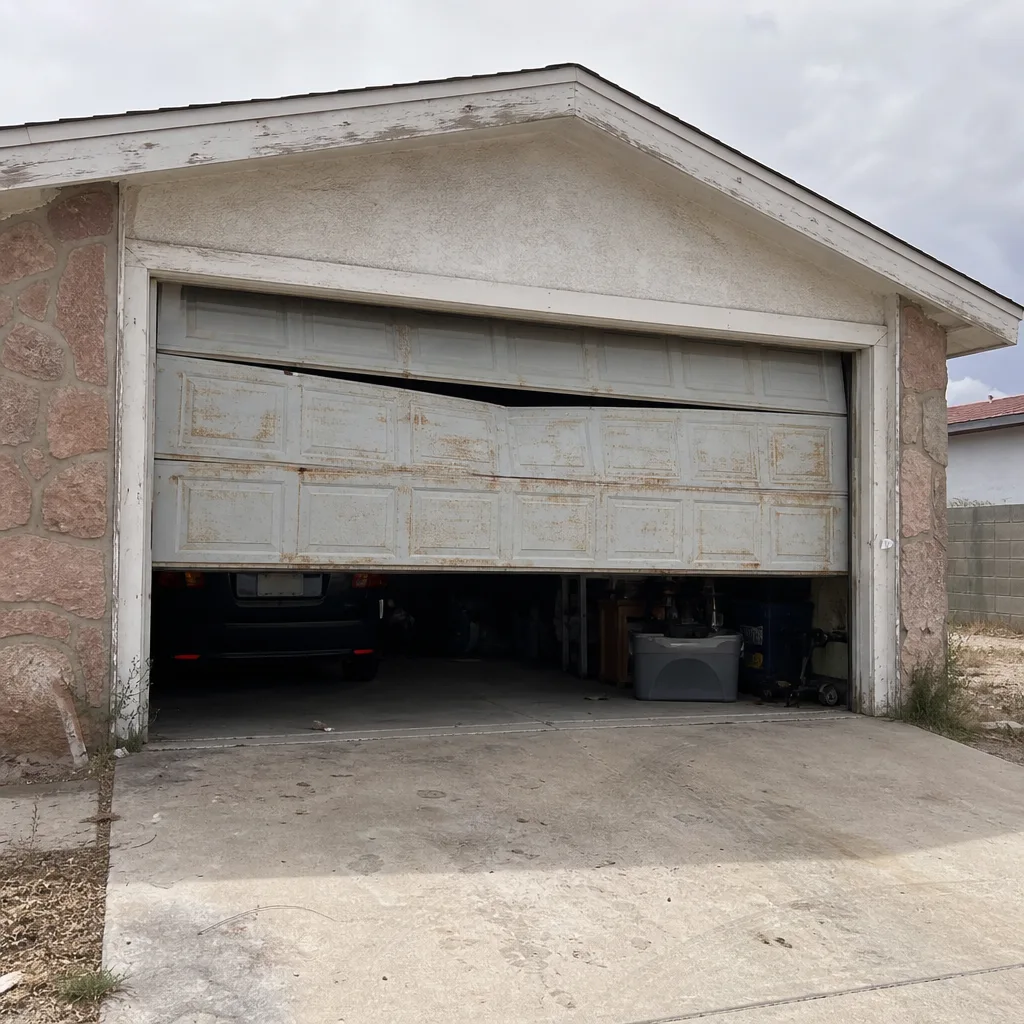 Before
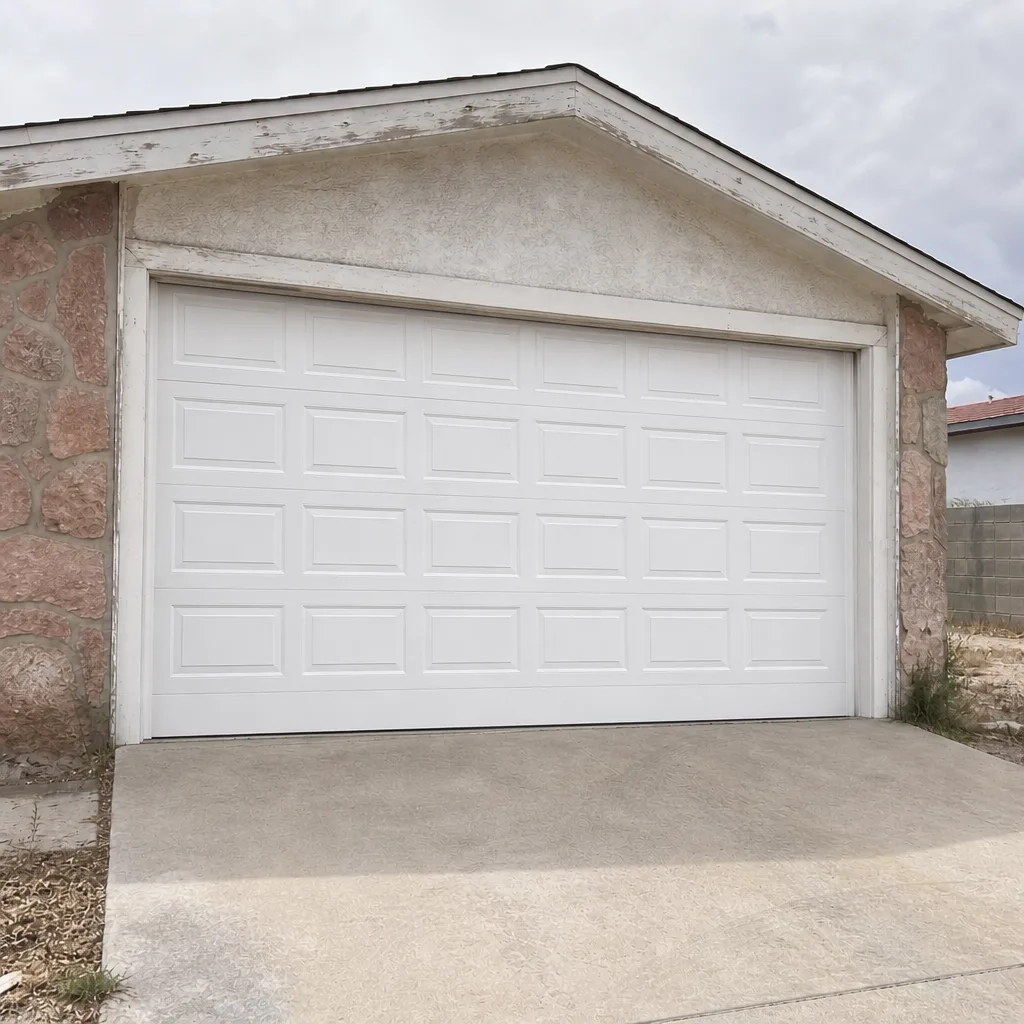 After
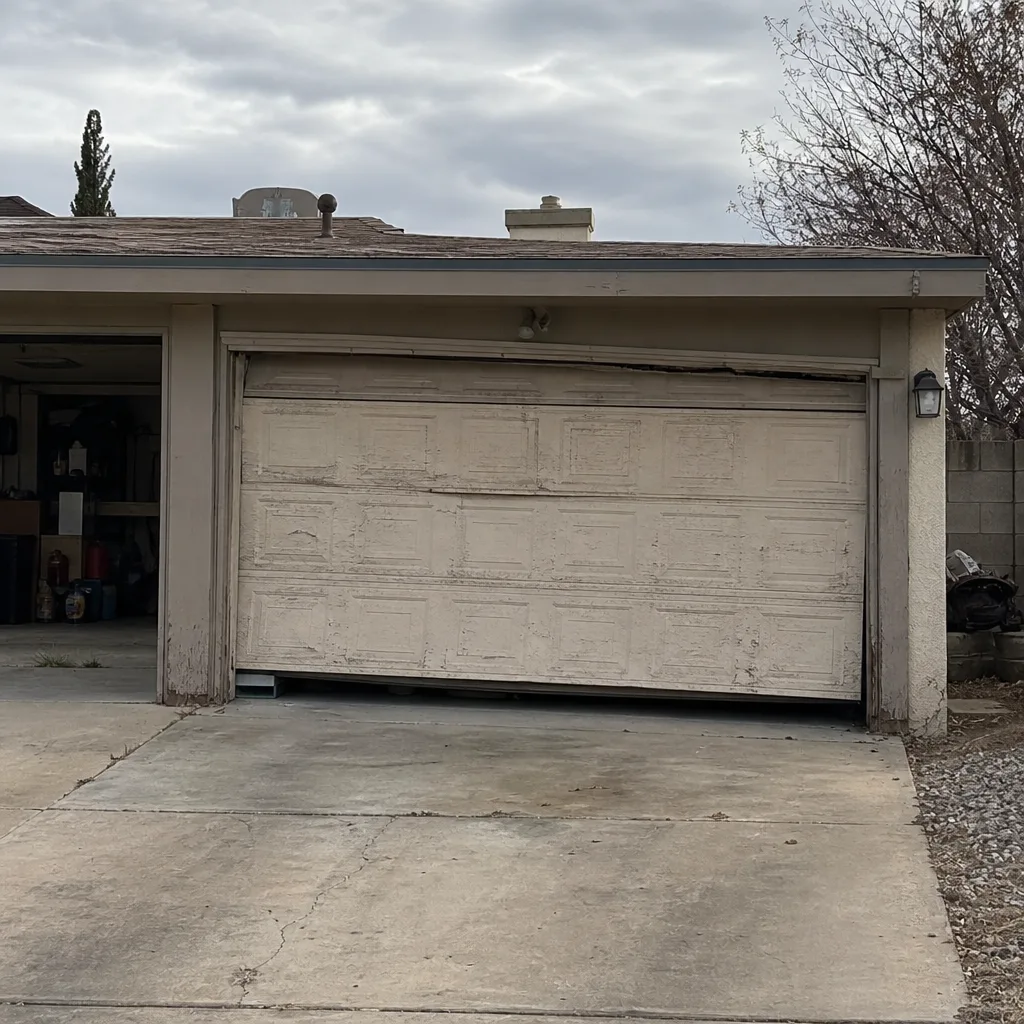 Before
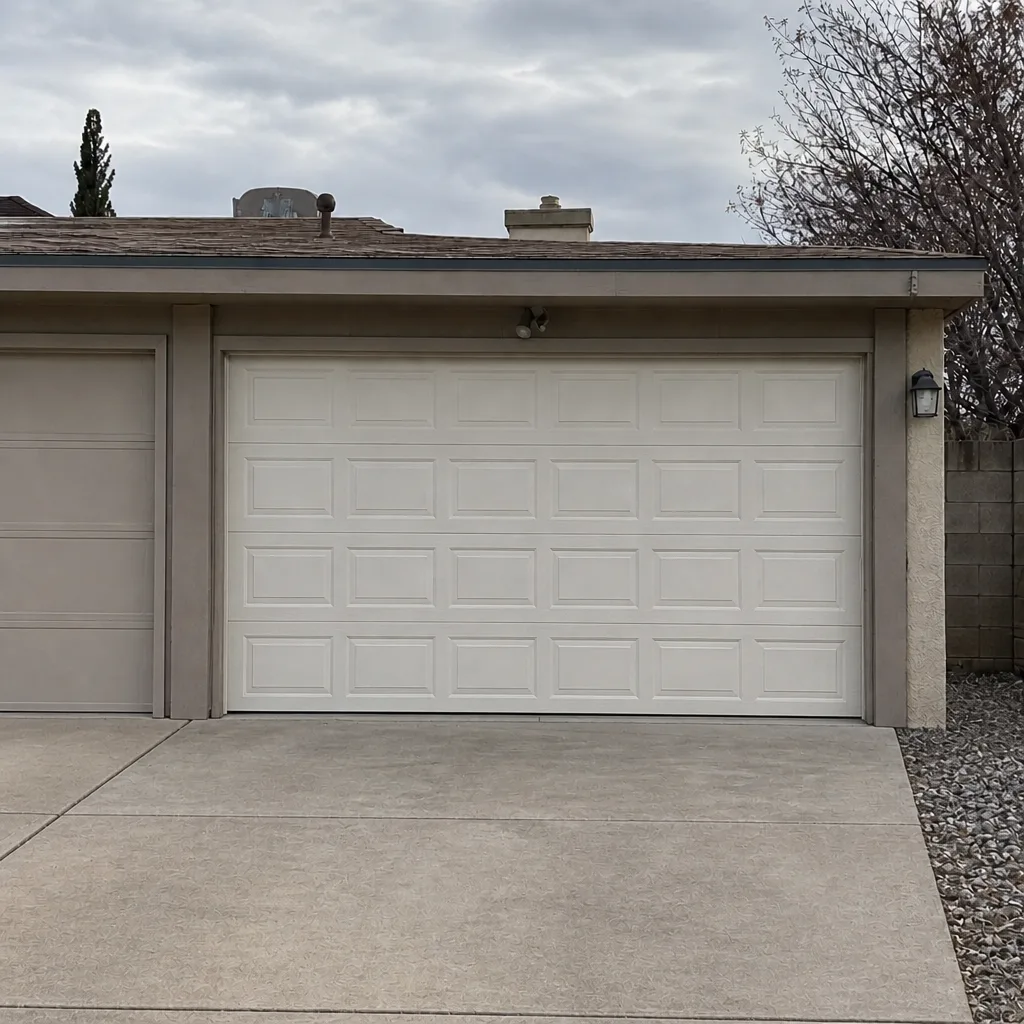 After
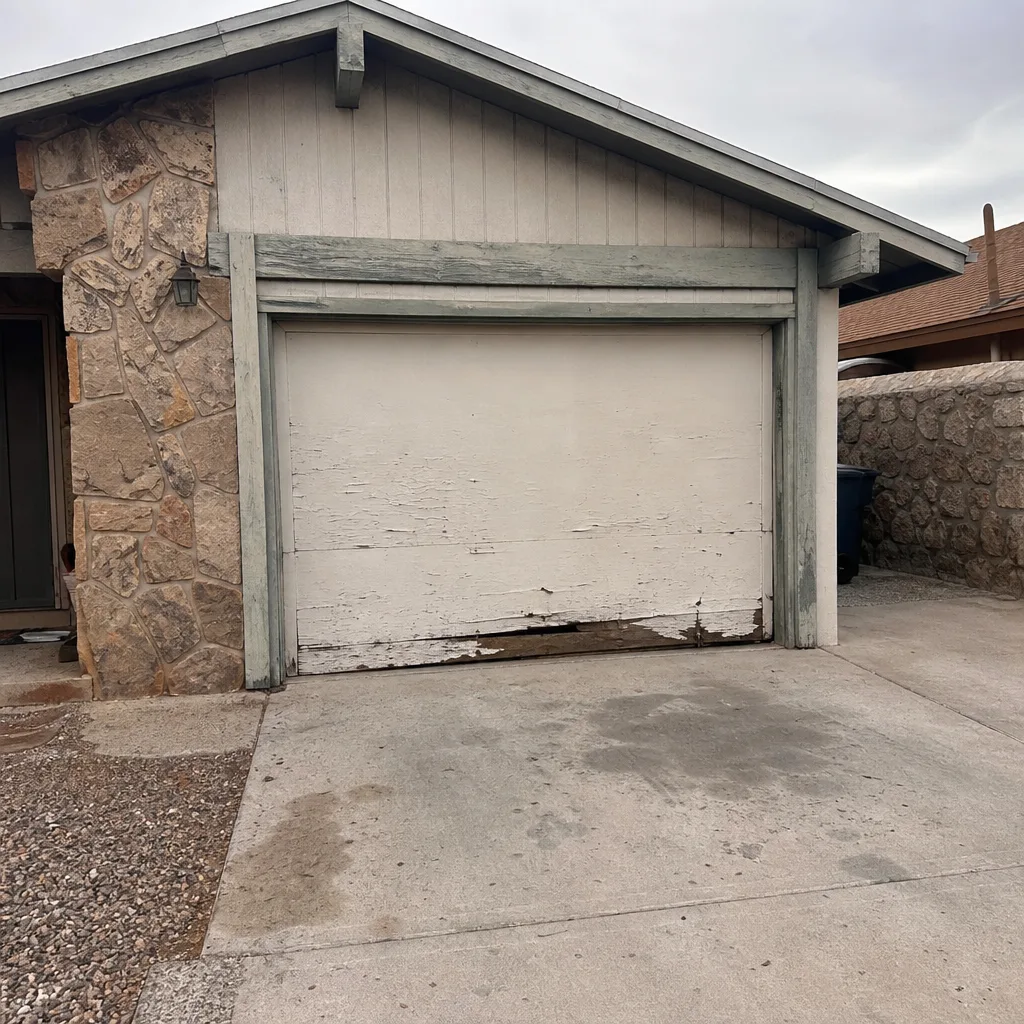 Before
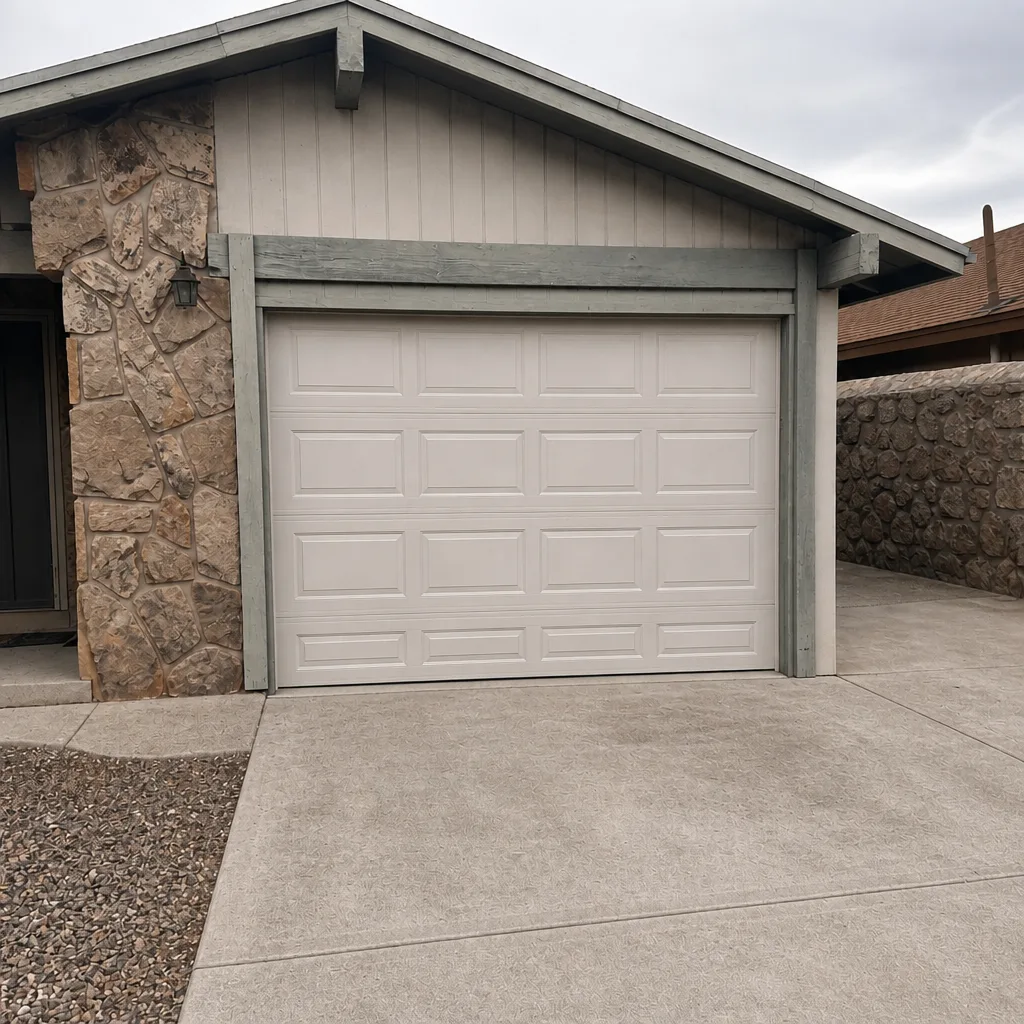 After
When to Call a Professional
Call a technician when the door won’t open or close, reverses for no reason, drops fast, or hangs crooked, and when you see a broken spring, a frayed cable, or a bent track. Call if the opener grinds, hums without moving the door, or the safety reverse fails the test. Call anytime the door rubs or leaves a gap at the bottom that has grown over time, since that usually means the floor has shifted the door out of alignment. El Paso Garage Door Service offers free estimates in El Paso, and our team handles both the door and the opener in one visit. We answer 24/7, with fast dispatch from 7am to 7pm, Sunday through Friday, closed Saturday. Call (833) 345-7126.
Frequently Asked Questions
Garage door repair in El Paso depends on the part and the door, and every job is quoted before any work starts, so the written estimate is the price. A spring, roller, or seal replacement is a smaller job than a track rebuild or an opener repair. Call (833) 345-7126 for an exact quote, since estimates are free.
Often we can, and we answer 24/7 with fast dispatch from 7am to 7pm, Sunday through Friday, closed Saturday. A door stuck open is worth a call right away. A call outside dispatch hours is booked into the next opening, Sunday through Friday, 7am to 7pm.
Spring life depends on how often the door cycles and on the heat and dust the garage sees, and springs here can wear faster than in mild climates. There’s no fixed number of years. Watch for a door that feels heavy or drops fast, and have springs checked before they break.
A gap at the bottom corner usually means the door is out of level, often because the garage slab has shifted on caliche or adobe soil. A technician can recalibrate the door to the floor and adjust the travel limits. An adjustable bottom seal or threshold can close a gap that soil movement has opened.
We service eight major brands: LiftMaster, Chamberlain, Genie, Clopay, Amarr, Wayne Dalton, Craftsman, and Raynor. Between them they cover the large majority of doors and openers in El Paso homes. We fix what you already have rather than steering you toward a replacement.
Full-view aluminum offers a light, modern look and handles heat well, while insulated steel gives more wind stability and better heat control. The right pick depends on your opening, your wind exposure, and how much you want to keep up with seals and finish. A free measure and written price will lay out both options.
The Bottom Line
Garage doors in El Paso live under a sun and soil regime that generic guides ignore. The 300-plus sun days age steel finishes and bake vinyl seals. Wide temperature swings fatigue springs. Caliche and adobe soil move the slab and throw the door out of balance. The smart approach is to keep the whole system, door and opener, in good shape, to stay ahead of seal and spring wear, and to service it with someone who knows your brand rather than pushing a replacement you don’t need. Fix what you have when you can, replace when the door itself is failing, and always get the price in writing first.
If your garage door is giving you trouble, we’re ready to help. Call El Paso Garage Door Service at (833) 345-7126 for a free estimate. We answer 24/7, with fast dispatch from 7am to 7pm, Sunday through Friday, closed Saturday. Our technicians have up to 8 years of experience across LiftMaster, Chamberlain, Genie, Clopay, Amarr, Wayne Dalton, Craftsman, and Raynor, and we handle the door and opener together in one visit. Serving El Paso and the surrounding neighborhoods, the price is confirmed before any work begins.
Written by the team at El Paso Garage Door Service.