
Last updated November 15, 2026
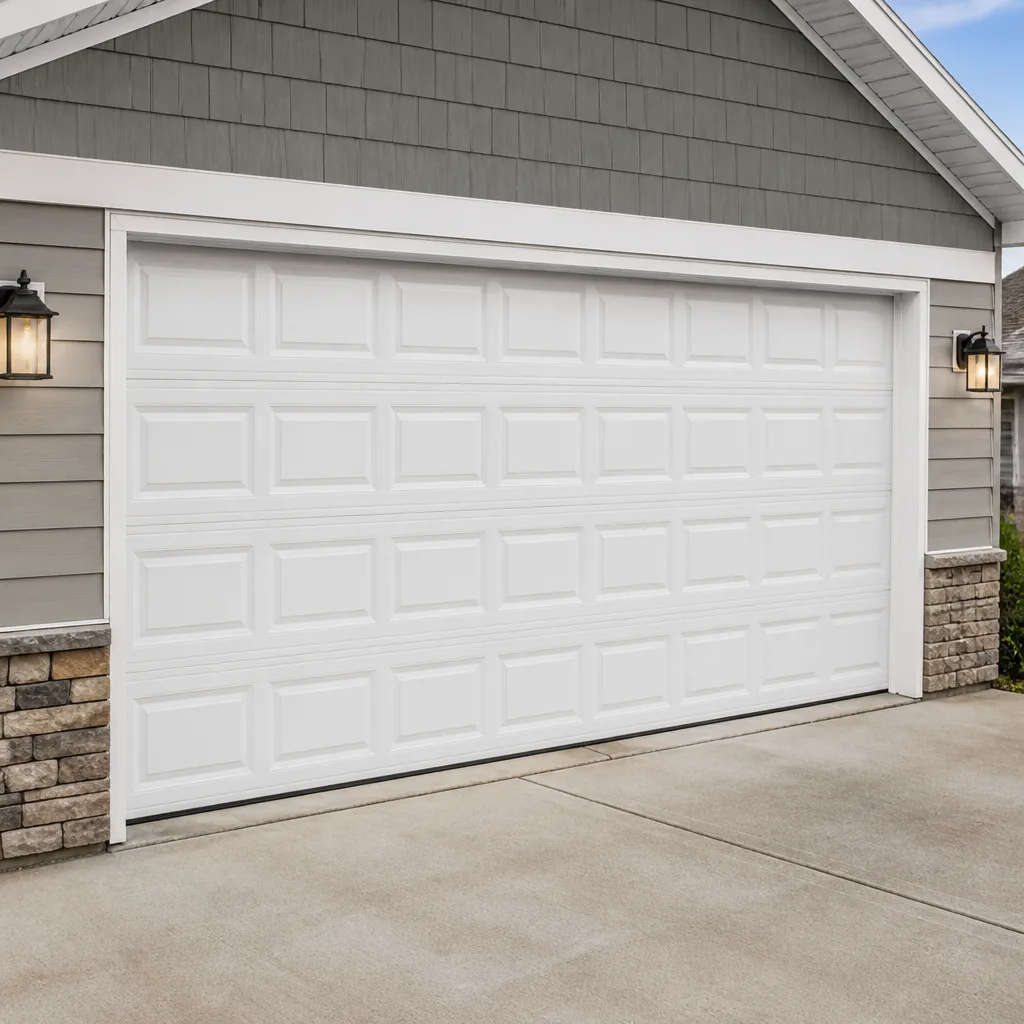 Raised-panel steel
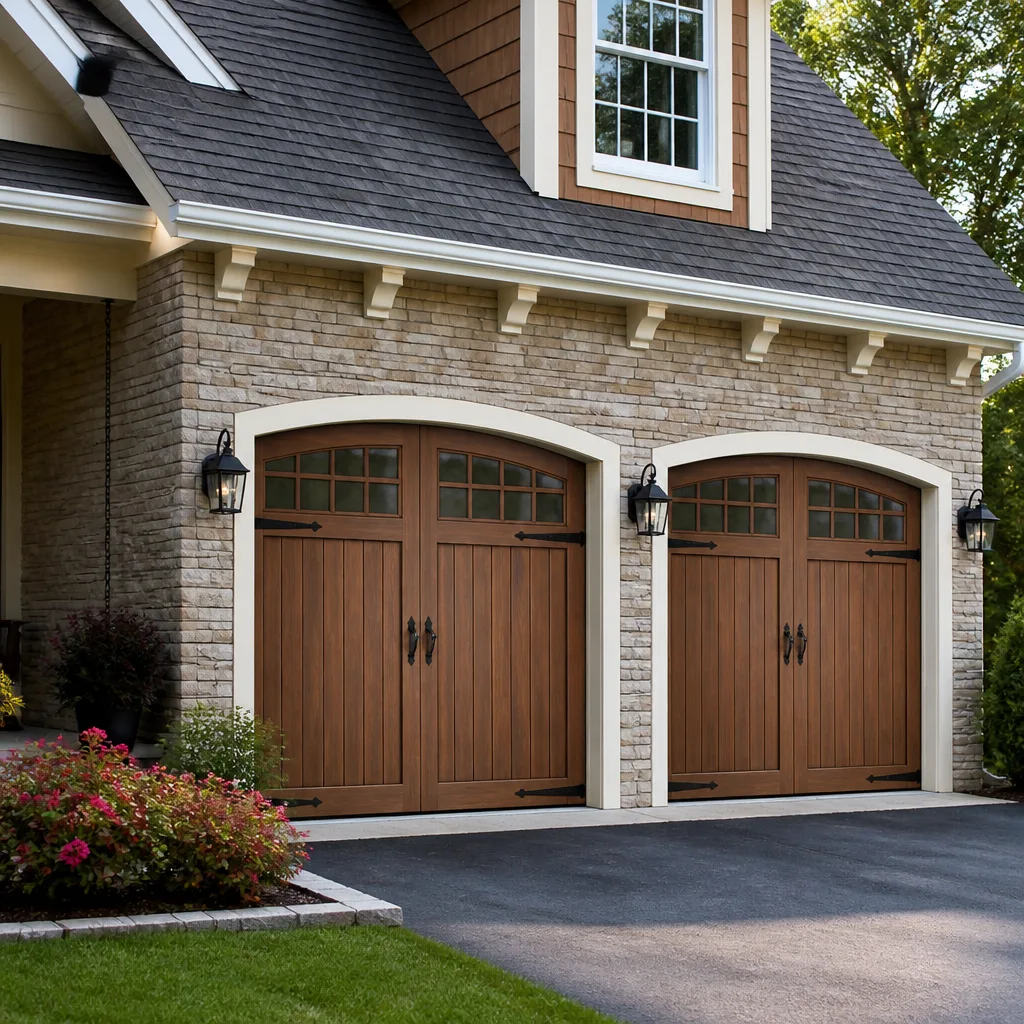 Carriage house
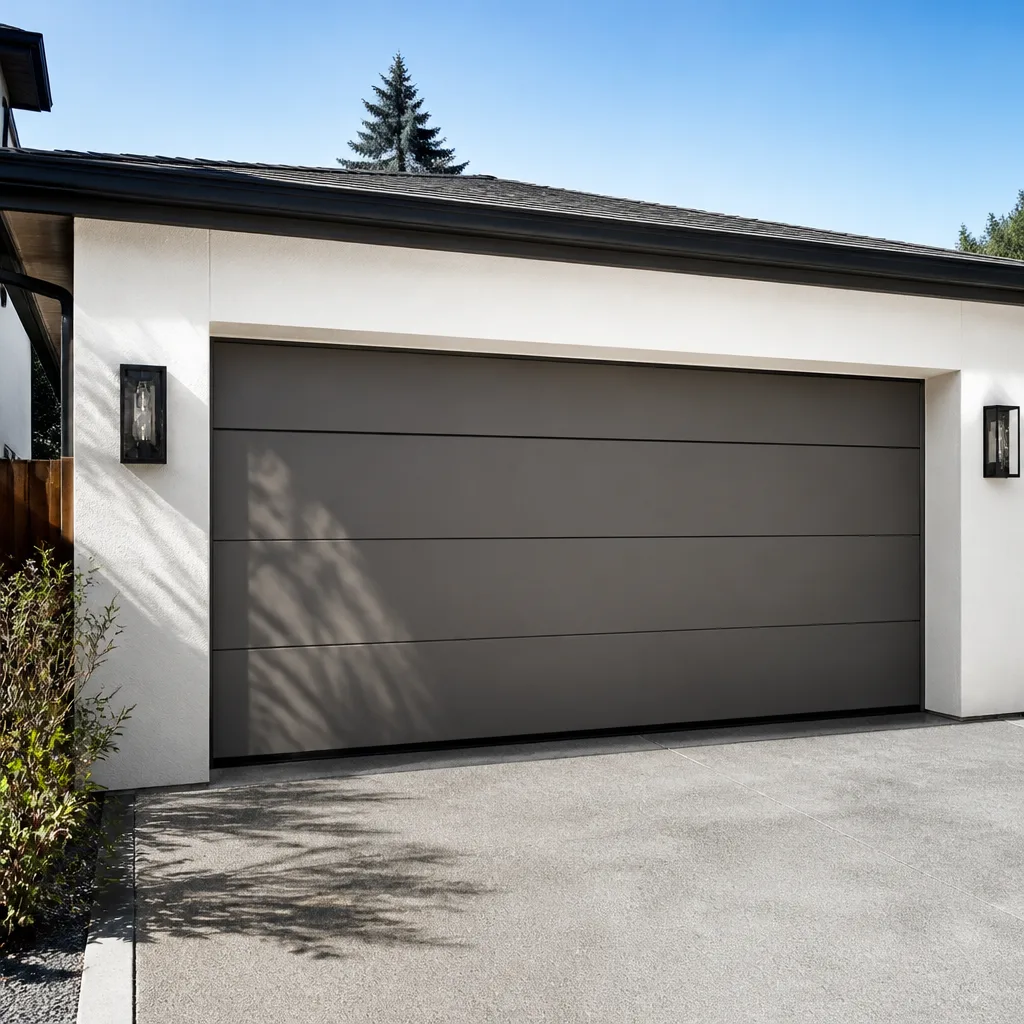 Modern flush
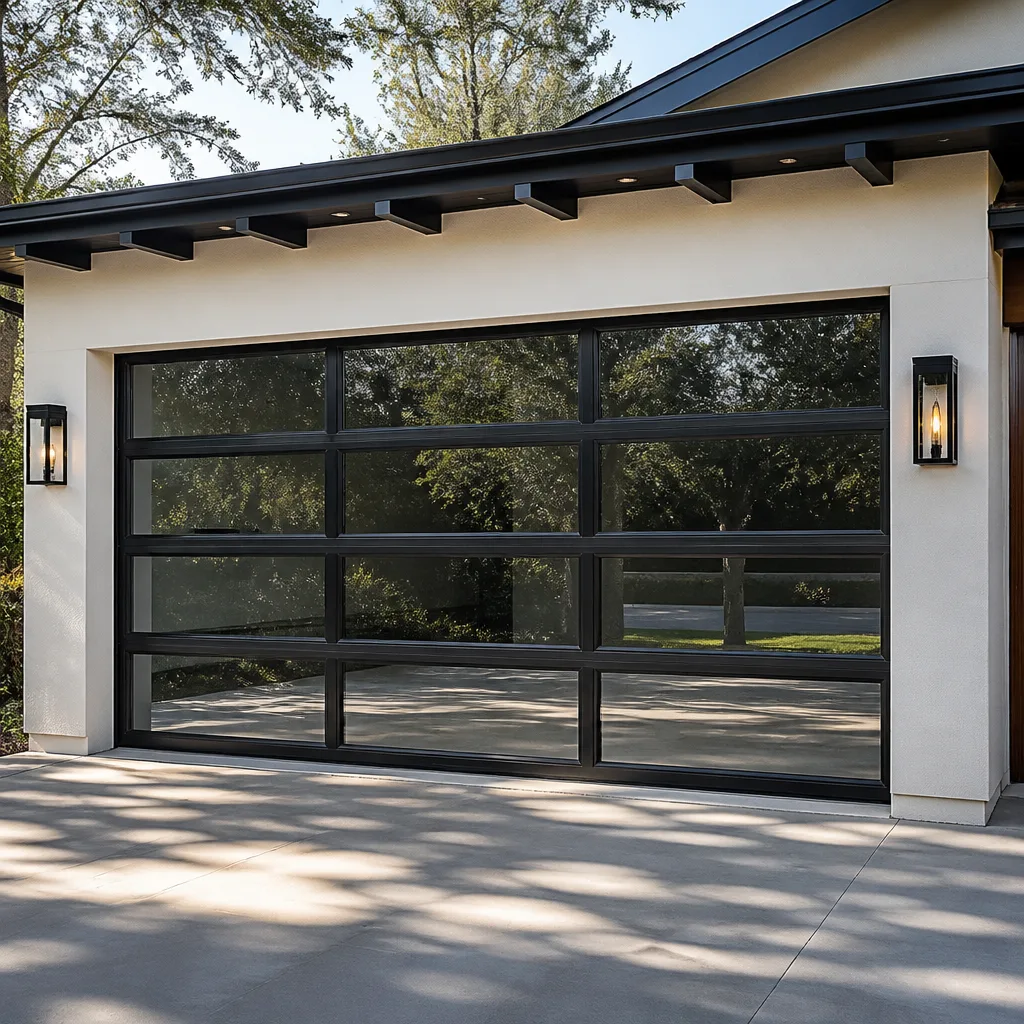 Full-view glass
 LiftMaster openers
 Chamberlain openers
Full 25-point door and opener safety check with every visit - springs, cables, rollers, tracks, and your LiftMaster or Chamberlain opener included
You get a price before we start. It does not change when the pro arrives.
Get your free estimateGarage Door Warning Signs: An El Paso Homeowner’s Reference Guide
A garage door that hesitates for half a second before it moves isn’t “normal for an older door.” That pause is usually an opener working harder than it should because a spring is losing tension. In El Paso’s heat, that half-second turns into a snapped spring or a burned-out motor within one or two seasons if nobody looks at it.
Most warning-sign lists cover the loud, obvious stuff: a door that won’t close, a snapped cable, a motor that hums and does nothing. By the time those show up, you’re not reading a guide, you’re making a phone call. This one is about the quiet signals that come first, the ones that are easy to miss in El Paso because they creep in slowly across a hot summer. Here’s what to watch for, what each symptom usually means, and a two-minute test you can run once a month.
Quick Answer
The earliest garage door warning signs in El Paso are a half-second hesitation before the door moves, a remote that needs to be closer than it used to, a door that drifts open or closed on its own after you let go, and torsion springs that show gaps between coils or orange rust flaking through the paint. Any one of these means a component is wearing and should be looked at before it fails outright. Catching them early is the difference between a small repair and a door that’s stuck open in the middle of July.
Styles & brands we work with
- Raised-panel steel
- Carriage house
- Modern flush
- Full-view glass
- LiftMaster openers
- Chamberlain openers
Table of Contents
- What the Sounds Are Telling You
- Reading Torsion Spring Fatigue Before It Snaps
- Seasonal Drift: El Paso’s Heat and Door Balance
- Opener Behavior Changes and What They Mean
- The Two-Minute Monthly Balance Test
- Visual Checks You Can Do From the Driveway
- Common Mistakes to Avoid
- When to Call a Professional
What the Sounds Are Telling You
A garage door makes noise. That’s normal. What matters is which noise, where it comes from, and whether it’s new. Homeowners in El Paso often tell us the door “has always been loud,” and then when we open it up, three different sounds are happening at once from three different parts. Sorting them out is the first step.
Here’s how to separate the common ones:
- A dry, squeaky grind that rises and falls with the door’s travel. This is usually a dry hinge or a dry roller stem. Metal-on-metal contact with no lubrication. It’s the least urgent sound on this list, and the easiest to address, but it still means the hardware is wearing faster than it should.
- A rough, gravelly rumble from the track area, constant while the door moves. That’s typically a roller bearing that’s lost its grease or pitted. A sealed bearing can’t be re-greased once it’s gone, so the roller needs replacing. Left alone, a seized roller starts grinding the track itself, which turns a cheap fix into a bigger one.
- A sharp metallic pop or twang, usually at one specific point in the travel. This is often a cable rubbing against the drum flange or a spring coil catching. It’s a sound that means metal is being abraded or loaded unevenly, and it’s worth stopping the door and getting it looked at rather than running it repeatedly to “see if it goes away.”
- A single loud bang from above the door, followed by the door not lifting. That’s a torsion spring breaking. At that point the door is unsafe to operate and the call is no longer optional.
The pattern to listen for is change. If a door that used to run quiet now grinds on the way up, something has shifted. In El Paso, the dry heat pulls lubricant off hinges and rollers faster than in humid climates, so hardware that was greased a couple of summers ago may be running dry now. If you want a technician to listen to it in person, our garage door repair service covers the full mechanical assembly, not just the piece that’s making noise.
Reading Torsion Spring Fatigue Before It Snaps
Torsion springs almost never fail without warning. They give you signs for weeks or months before they let go. The problem is the signs are subtle and most homeowners don’t know what they’re looking at. A torsion spring is a coiled steel bar under heavy tension mounted on the wall above the door. When it’s healthy, the coils sit evenly spaced and the paint or powder coat is intact.
What fatigue looks like before a break:
- Gaps in the coil spacing. On a healthy spring, the coils are evenly spaced along the shaft. When a spring is losing tension or has been stretched past its working range, you’ll see uneven gaps, or coils that look bunched at one end and spread at the other.
- Rust-orange flaking on a painted spring. A torsion spring that’s been painted or powder-coated will start to shed that coating as the steel underneath fatigues and oxidizes. Orange flakes on the spring, or a dusting of rust-colored powder on the wall or floor beneath it, is a sign the steel is degrading. In El Paso’s dry climate, this shows up more as flaking than as heavy rust, because there’s no moisture to keep the corrosion wet.
- Coil separation under load. Watch the spring while the door is opening and closing. If you see coils visibly separating or the spring winding unevenly, it’s telling you the tension is no longer distributed the way it was designed to be.
- The door feels heavier than it used to. A spring that’s lost tension makes the opener compensate. That’s a sign you’ll feel before you see.
We want to be direct here: torsion springs are under extreme tension, and adjusting or replacing one is not a homeowner task. A spring that lets go while someone is working on it can cause serious injury. This is one of the few parts of a garage door where the right move is always to stop and call a trained technician. If you’ve spotted any of the signs above, don’t run the door to test it. Leave it down and get it looked at.
Seasonal Drift: El Paso’s Heat and Door Balance
Every garage door is balanced by its springs to travel with roughly the same effort up as down. When the temperature swings hard, that balance shifts. El Paso runs hot in summer and cool in winter, and the steel tracks, springs, and door panels all expand and contract at slightly different rates. A door that was perfectly balanced in March can feel noticeably heavier in August.
That shift is normal up to a point. The question is where the line is.
Mild seasonal drift looks like a door that needs a hair more effort to lift by hand, or that settles a little differently at the top of its travel. It corrects as the season changes, and it doesn’t put extra strain on the opener beyond its normal working range. You can check it with the manual balance test below and it will pass, just barely.
Drift that has crossed into dangerous territory looks like this:
- The door won’t hold its position when you stop it halfway. It slides down on its own, or runs up.
- The opener strains audibly at one part of the travel, or reverses before it reaches the top.
- You can lift the door by hand but it takes real effort, which means the springs are no longer doing their share.
- The door travels unevenly, with one side lagging behind the other.
When a door drifts past balance, the opener takes on the weight the springs should be carrying. That’s what burns out motors and strips gears months later. El Paso homeowners who notice the drift early usually end up with a spring adjustment rather than an opener replacement. If you suspect the balance is off and you’d rather have a technician confirm it, our team works on both the door and the opener so you’re not coordinating between two different contractors to figure out which one is the problem.
Opener Behavior Changes and What They Mean
Openers rarely fail without telling you first. The behavior changes come before the failure, and each one points to a specific probable cause. Here’s how we map the common ones:
- The door moves slower than it used to. This is almost always a load problem, not an opener problem. The opener is working harder because the door is heavier than it should be, usually from spring fatigue or a binding track. A slower door is an early warning that something in the mechanical system needs attention.
- The motor keeps running after the door has stopped. This usually means a limit switch has drifted out of adjustment, or a gear or sprocket inside the opener has stripped. The motor runs but the drive isn’t engaging. It’s a worn-part issue, not a motor that needs replacing.
- The remote range shortens over time. A remote that used to open the door from the end of the driveway and now only works from ten feet away can mean a failing logic board, a weak battery, or interference from nearby electronics. Start with the battery. If a fresh battery doesn’t fix it, the opener’s receiver is worth diagnosing.
- The door reverses for no reason, or stops partway. On modern openers like LiftMaster and Chamberlain units, this is often the safety sensor being nudged out of alignment or picking up sunlight. On older chain-drive units, it can be a failing travel module.
- The opener runs but the door doesn’t move at all. A broken spring, a snapped cable, or a disconnected emergency release. Stop using the opener immediately; running it against a broken spring will damage the motor.
Openers from LiftMaster, Chamberlain, Genie, and Craftsman all have different diagnostic behaviors, and the fix for a Genie screw-drive is not the same as the fix for a LiftMaster belt-drive. If the opener is the piece that’s failing, our garage door opener repair covers the operator separately from the door so you know exactly what’s being worked on.
The Two-Minute Monthly Balance Test
This is the single best early-detection tool a homeowner has. It catches problems months before they become emergency calls, and it takes two minutes. Do it once a month, and do it after any stretch of unusually hot weather in El Paso.
- Close the door completely. Disconnect the opener by pulling the red emergency release handle. The door is now on its springs alone.
- Lift the door by hand to about waist height. Use the bottom panel, lift with your legs, not your back. If the door feels very heavy at this point, stop. The springs have lost tension and the door is not safe to test further.
- Let go and watch. A balanced door stays where you left it, or drifts less than a few inches. A door that slides down on its own has weak springs. A door that runs up has springs that are too tight or a cable problem.
- Lower the door gently and reconnect the opener. Run it through a full open-and-close cycle and listen for any sound that’s new.
Three results are worth calling about: the door won’t hold halfway at all, it takes real effort to lift by hand, or it moves unevenly with one side lagging. Any of those means the springs are no longer doing their job, and the opener is carrying weight it wasn’t designed to carry. Catching it here is far cheaper than catching it after a spring snaps or a motor burns out. If the test fails, stop running the door and get it checked.
Visual Checks You Can Do From the Driveway
You don’t need to climb a ladder for most of this. A slow walk around the door while it’s open, done once a month, will surface most of the early warning signs. Do the visual check after the balance test so you’re looking at a door you know is roughly in balance.
- Tracks. Look along the vertical and horizontal tracks for bends, dents, or sections where the gap between them widens. A track that’s been knocked out of alignment will drag the rollers and make the door work harder. Check the mounting brackets at the ceiling and wall for looseness.
- Rollers. Look at the rollers in the tracks. Worn rollers look flat-spotted or chipped. Seized ones have visible rust or a missing bearing cap. If you can see one that isn’t turning freely, it needs replacing.
- Cables. Look at the cables on each side. They should be taut and evenly wound around the drums. Fraying, kinks, or a cable that’s starting to lift out of its drum groove is a stop-and-call situation. Cables are under the same heavy tension as springs.
- Panels. Look for cracks, dents, or separation between panels. On steel doors like Clopay and Amarr models, a panel that’s been dented can throw off the door’s balance and cause uneven wear on the rollers.
- Weather seal at the bottom. A torn or hardened bottom seal lets dust and heat in and can cause the door to bind at the floor. In El Paso’s dust, a worn seal also lets grit into the track over time.
- Hinges and hardware. Loose hinge screws and missing bolts are common and easy to spot. Loose hardware lets the door rack slightly as it moves, which accelerates wear everywhere else.
Anything that involves the springs or cables, leave alone. The rest is observation, not repair. If what you find needs a technician, a single visit can handle both the door hardware and the opener, which saves you from coordinating two separate appointments. Our El Paso Garage Door Service team diagnoses the full system in one pass so you’re not told to call someone else for the opener.
Common Mistakes to Avoid
- Treating a hesitation as normal. A half-second pause before the door moves is not a personality quirk of an older door. It’s the opener compensating for a spring that’s lost tension. El Paso’s summer heat accelerates that loss, so a door that hesitated all last summer is probably worse now.
- Greasing the tracks. This is the most common mistake we see. Tracks should stay clean and dry. Grease attracts dust, and in El Paso’s dusty air, greased tracks turn into grinding paste that wears out the rollers faster. Lubricate the hinges, roller stems, and the spring (if you’re doing light maintenance with a proper garage door lubricant), never the track surface itself.
- Running the opener against a broken spring. If the door won’t lift and the opener is running, the spring is likely broken. Running the opener against that load will burn out the motor or strip the gears in a single session. Stop, disconnect with the release handle, and call.
- Adjusting spring tension yourself. Torsion springs are under enough tension to cause serious injury. No homeowner should be turning the winding bars on these. If the balance test fails, that’s a technician call.
- Replacing the opener when the door is the problem. A slow door usually has a door problem, not an opener problem. Replacing a perfectly good LiftMaster or Chamberlain unit because the door is binding wastes money and leaves the actual cause in place. Diagnose the door first.
- Ignoring remote range changes. A remote that needs to be closer is telling you something. Sometimes it’s a battery, but on older openers it can mean the receiver is failing. Catching it early means replacing a small part instead of the whole unit.
- Waiting until the door fails to schedule a check. The cheapest garage door problems are the ones caught before they break. A monthly balance test and a monthly visual walk-around will find most of them.
When to Call a Professional
Call us when the balance test fails, when you see gaps in the spring coils or orange flaking on the spring, when a cable looks frayed or has lifted out of its drum groove, when the opener runs but the door doesn’t move, or when the door reverses on its own repeatedly. Also call if you’ve heard a metallic pop from above the door and the door now won’t lift; that’s a broken spring and the door is unsafe until it’s replaced. Do not test a door with a suspected broken spring. Leave it down and get it looked at.
El Paso Garage Door Service offers free estimates in El Paso. Call (833) 345-7126. We answer 24/7. Fast dispatch from 7am to 7pm, Sunday through Friday. Our technicians have up to 8 years of experience, and they work on both the door and the opener in a single visit, so you’re not sent to another contractor for half the job. The price is quoted and agreed before any work starts, and the written estimate sets the final price.
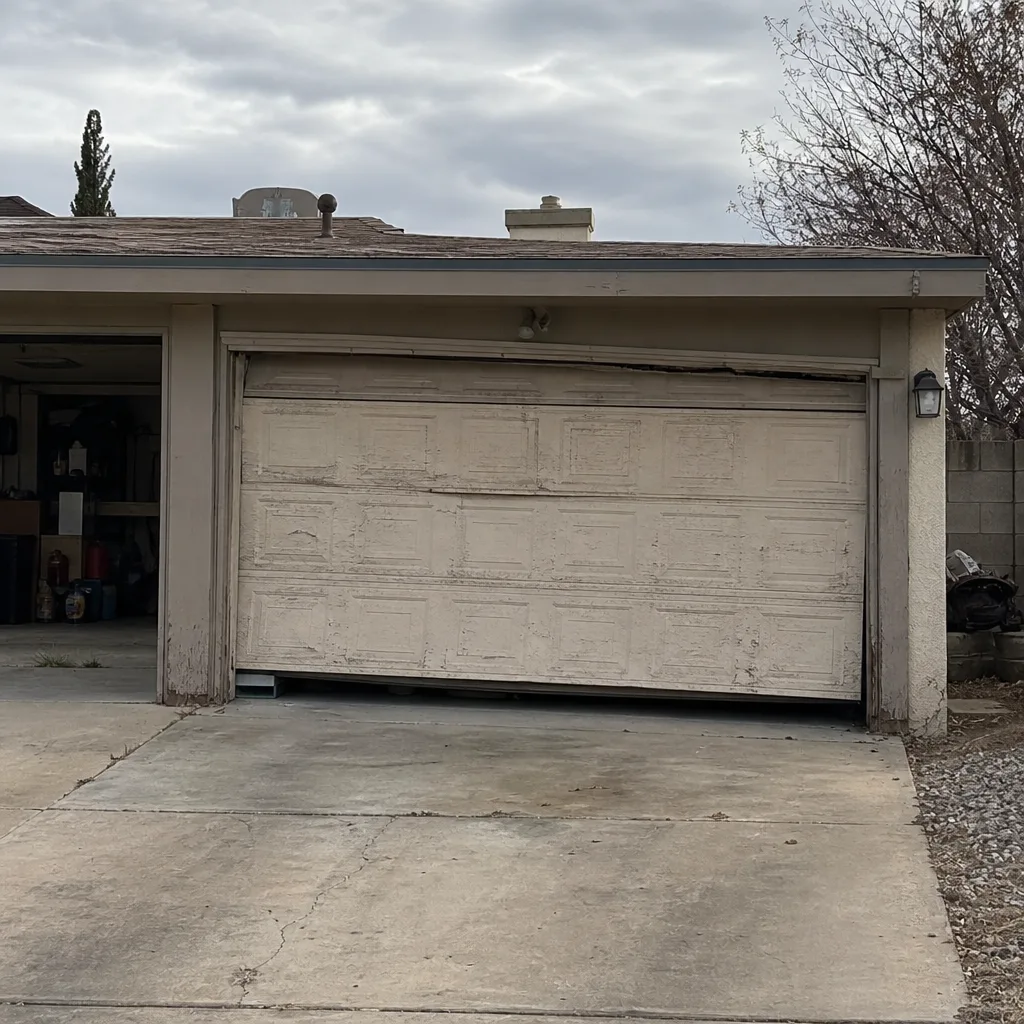
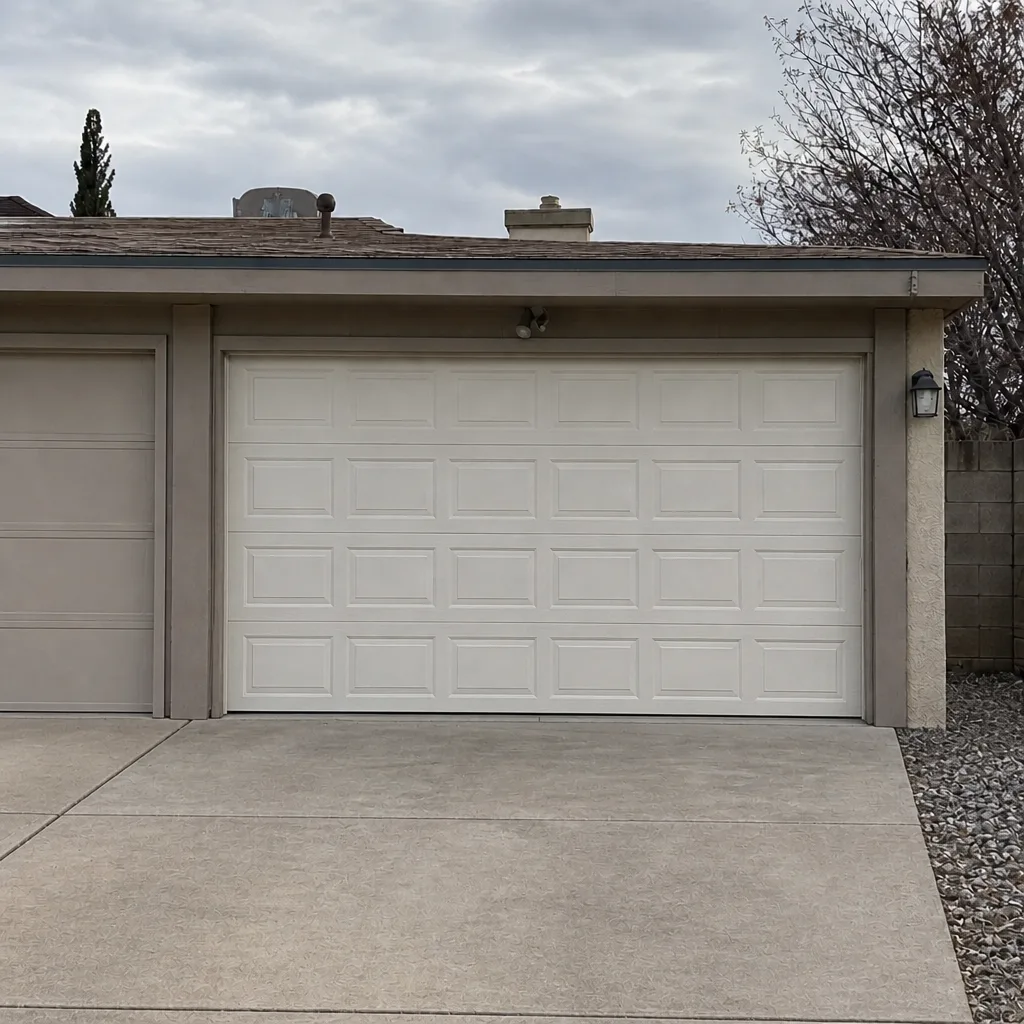
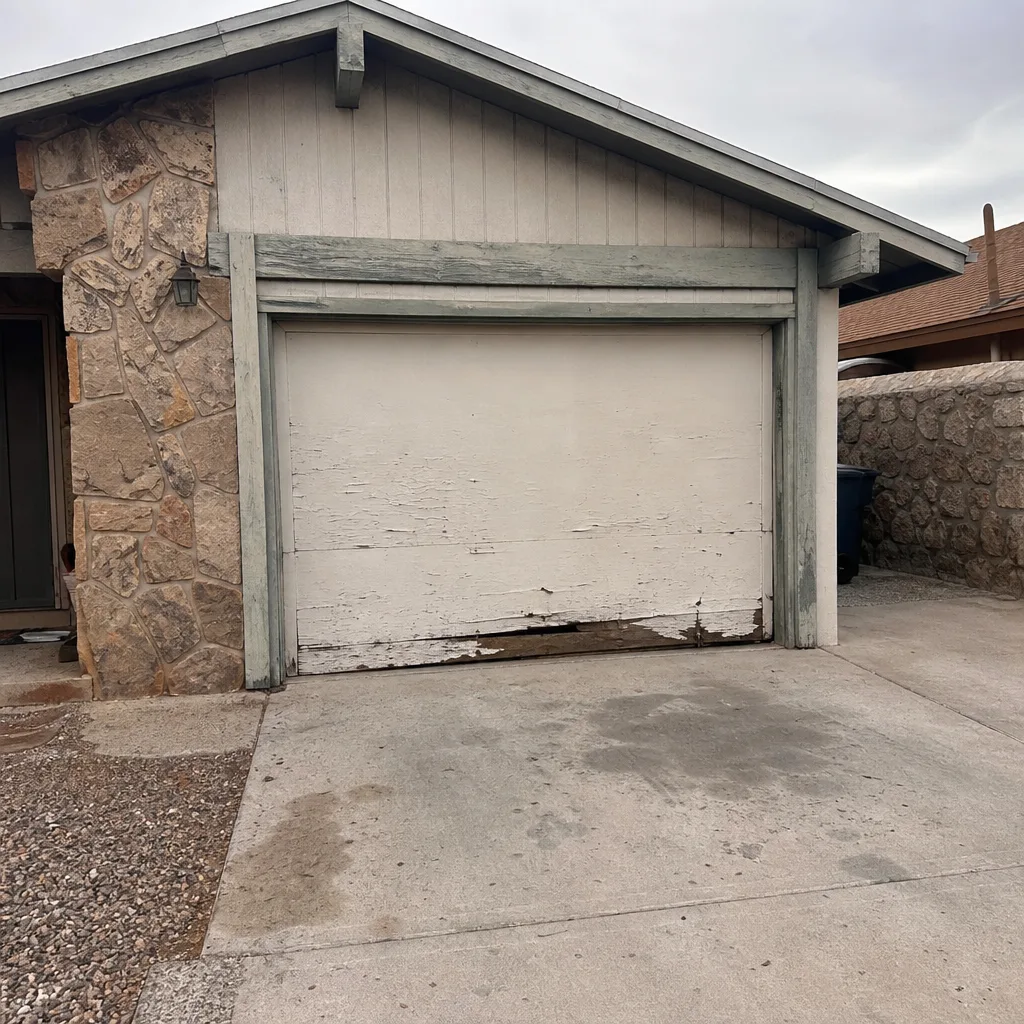
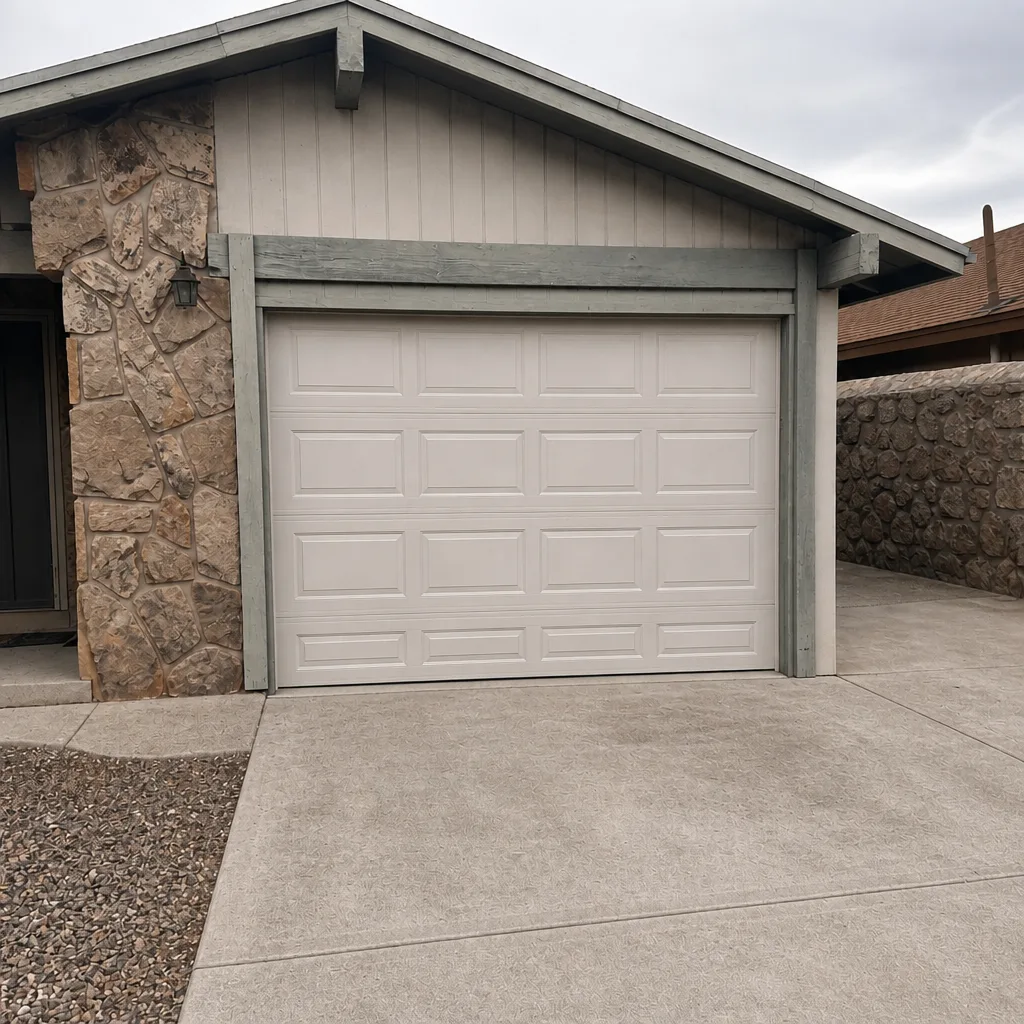
See the difference
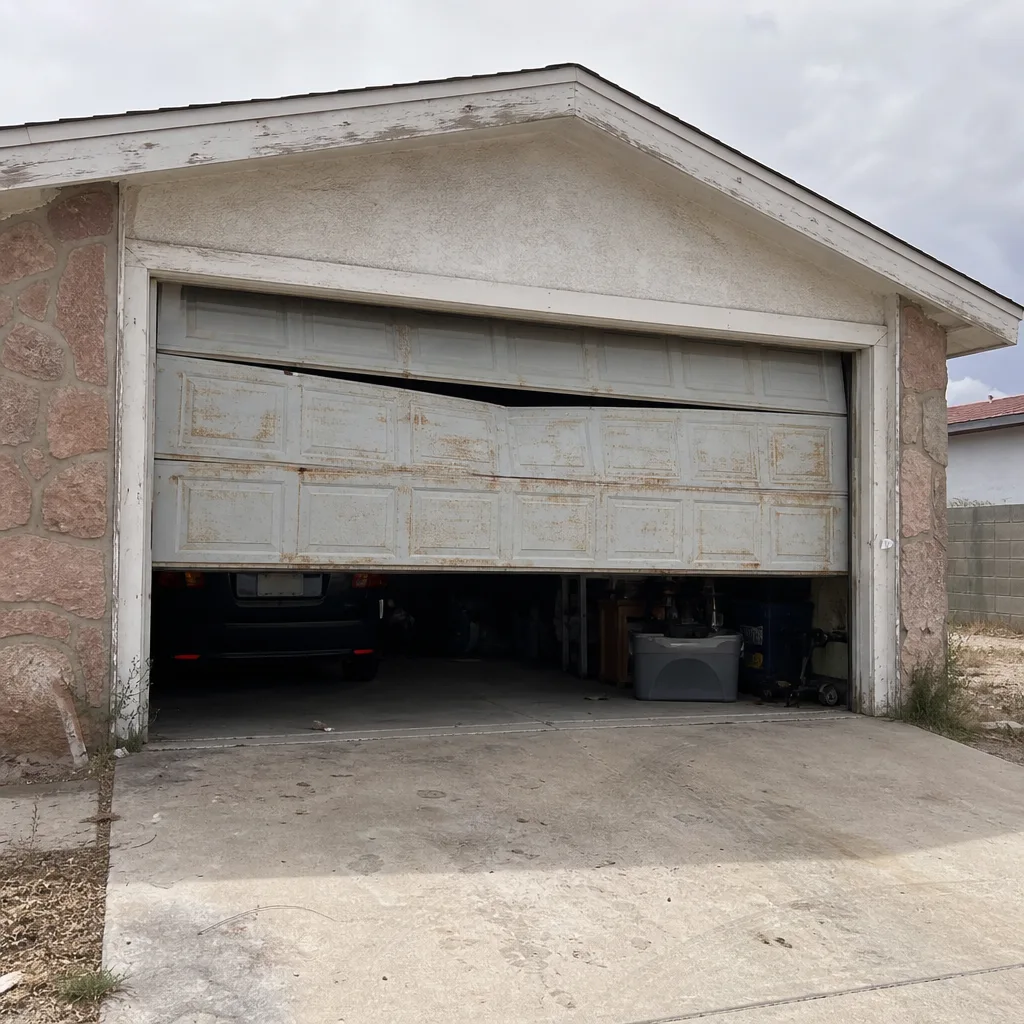 Before
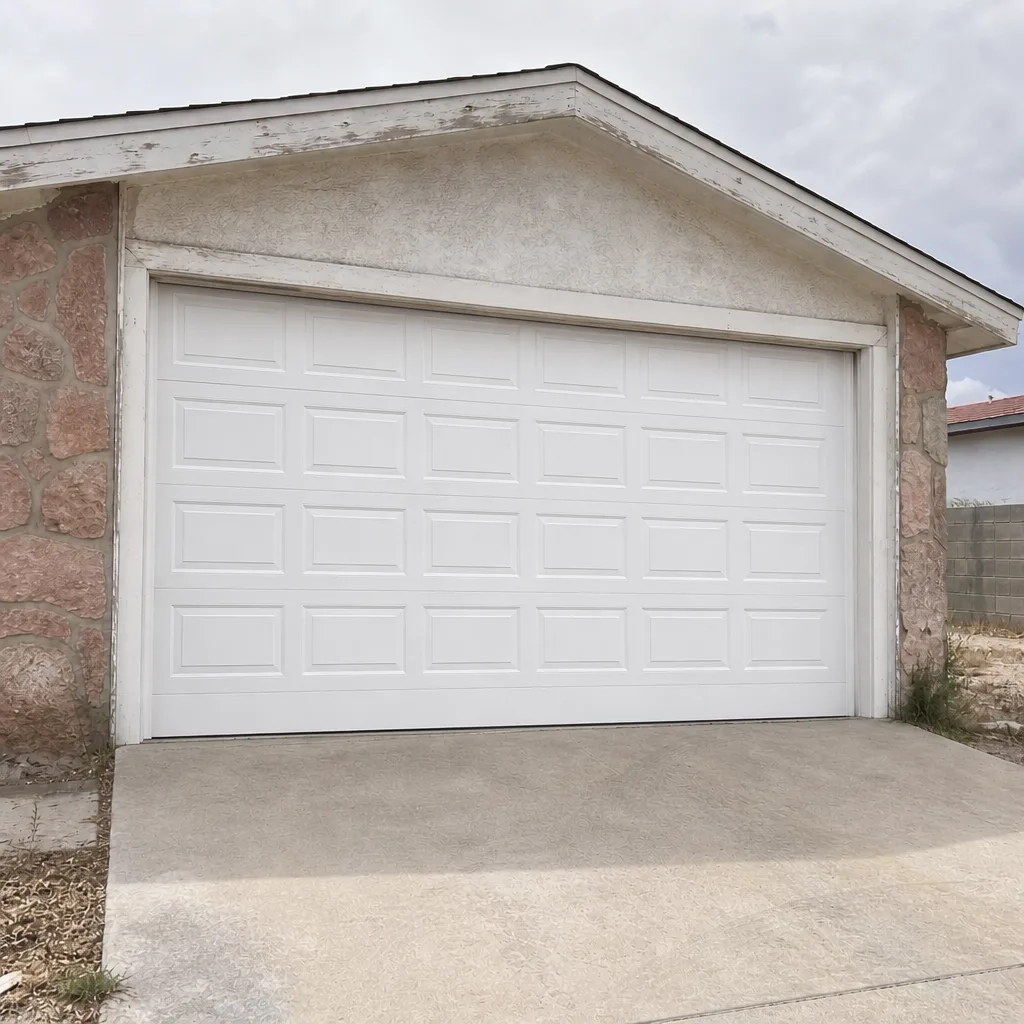 After
 Before
 After
 Before
 After
Frequently Asked Questions
You usually can. Look for uneven gaps between the coils, orange rust flaking through the paint or powder coat, and coils that separate visibly while the door is moving. A door that suddenly feels heavier to lift by hand is also a sign the spring has lost tension. Any of these means the spring needs a visual inspection by a technician, and the door should be left down until it’s checked. Call (833) 345-7126 for an exact quote; estimates are free.
A pause before the door moves usually means the opener is working harder than it should because the springs have lost tension. The opener has to overcome the door’s weight before the door starts moving, and that takes a moment. In El Paso’s heat, springs lose tension faster, so a hesitation that starts in summer often gets worse by the next summer. It’s worth diagnosing before it turns into a burned-out motor. Call (833) 345-7126 for an exact quote; estimates are free.
Once a month is the right frequency, and more often after any stretch of extreme heat. The balance test takes about two minutes: disconnect the opener, lift the door to waist height by hand, let go, and see whether it holds its position. A door that slides down on its own needs a spring check. Do the test year-round, because El Paso’s seasonal temperature swings are what drive the drift.
Start by replacing the remote battery. If a fresh battery doesn’t fix the range, the opener’s receiver or logic board is likely failing, especially on older units. On LiftMaster and Chamberlain openers, range issues also come from nearby electronics or a metal object between the remote and the opener. A technician can test the receiver directly and tell you whether it’s a battery, a board, or interference. Call (833) 345-7126 for an exact quote; estimates are free.
No. Tracks should stay dry and clean. Grease attracts dust, and in El Paso’s dusty air, a greased track turns into grinding paste that wears out the rollers and the door hardware. Lubricate the hinges and roller stems instead, and leave the track surface clean. If the door is grinding, the problem is usually a roller or a track alignment issue, not a lack of grease.
The price is quoted and agreed before any work starts, and the written estimate sets the final price. If the technician finds something the initial diagnosis missed, they’ll walk you through what it is and what it costs before doing anything. You won’t get a surprise invoice. El Paso Garage Door Service offers free estimates; call (833) 345-7126 to schedule one. We answer 24/7. Fast dispatch from 7am to 7pm, Sunday through Friday.
The Bottom Line
The garage door warning signs that matter most in El Paso are the quiet ones: a half-second hesitation, a remote that needs to be closer, a door that drifts on its own, a spring showing gaps or orange flaking. None of these is dramatic, and that’s exactly why they get missed until something fails. The fix is simple. Run the two-minute balance test once a month, do a visual walk-around while you’re out there, and listen for sounds that are new. If the balance test fails or you see spring or cable damage, stop running the door and get a technician out. Call (833) 345-7126 for a free estimate. We answer 24/7. Fast dispatch from 7am to 7pm, Sunday through Friday.
Written by the team at El Paso Garage Door Service.