
Last updated November 15, 2026
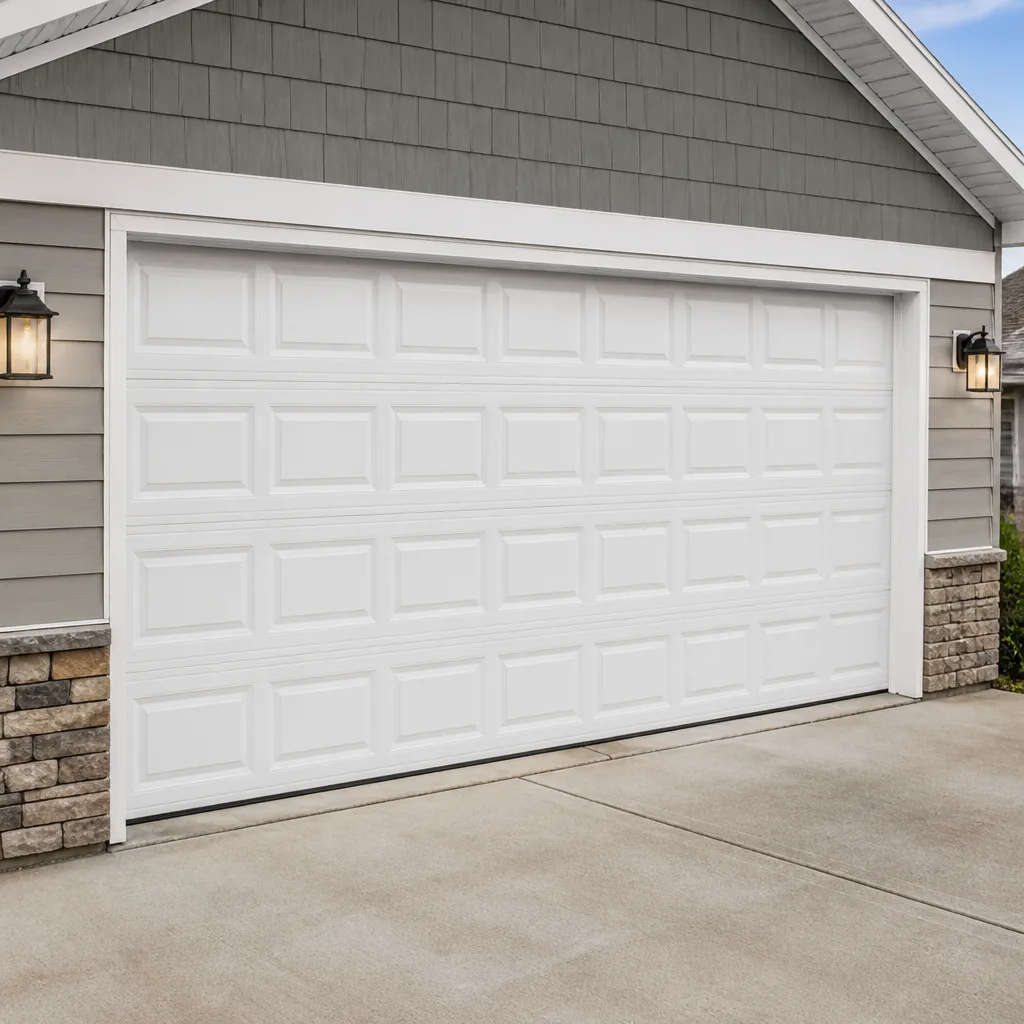 Raised-panel steel
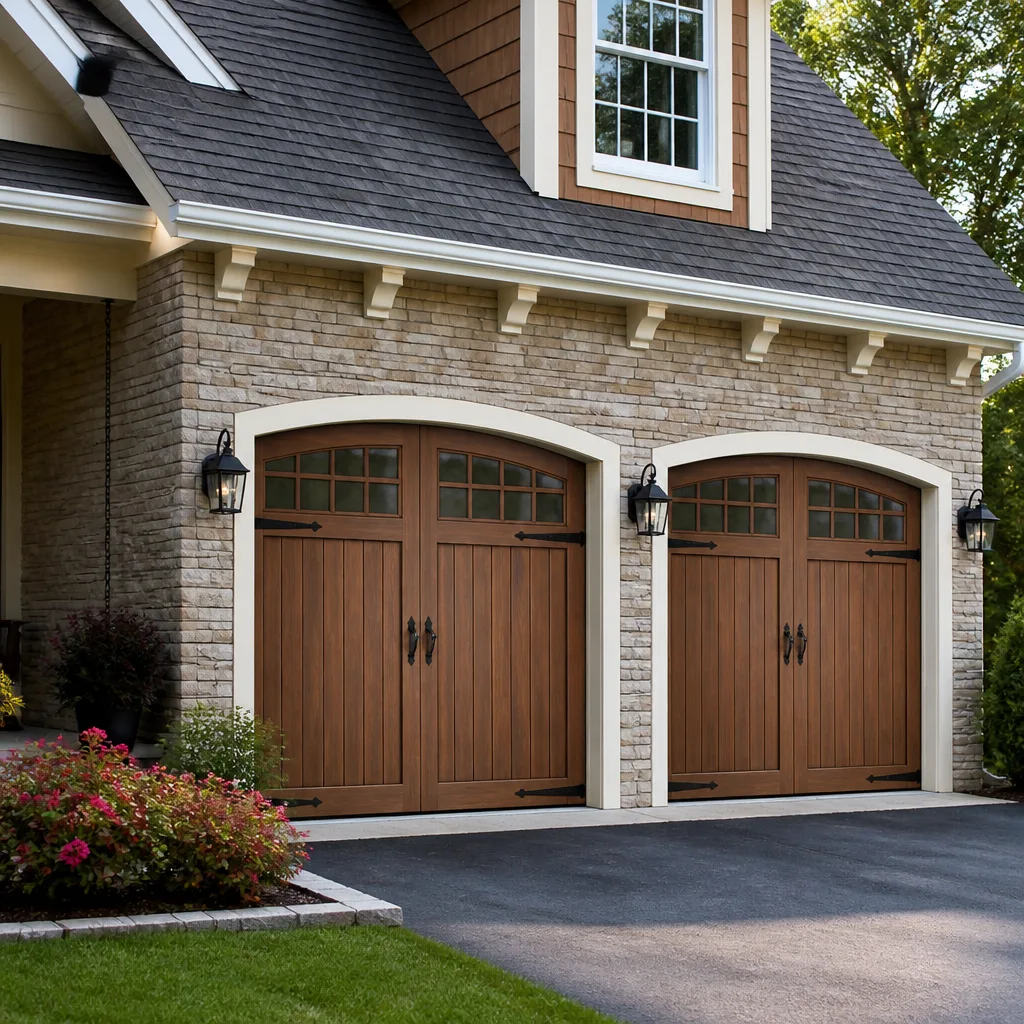 Carriage house
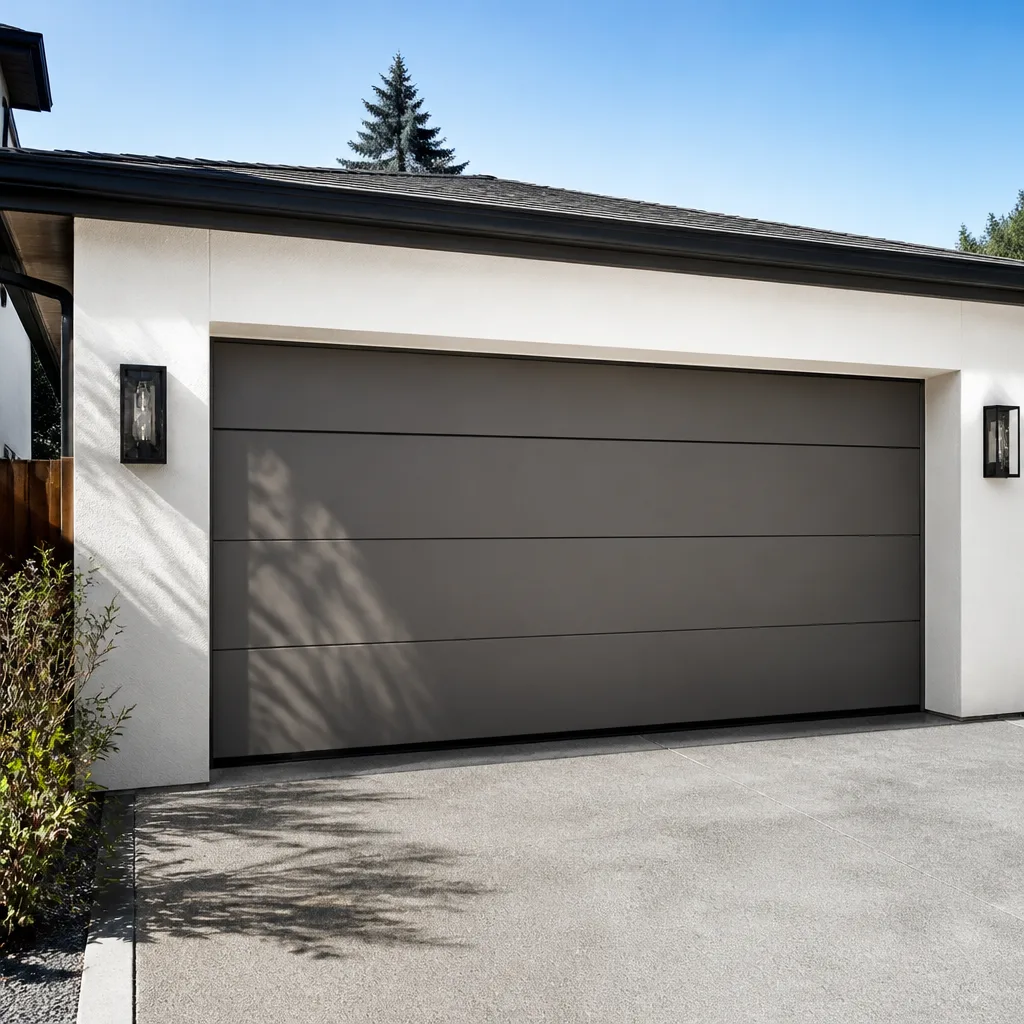 Modern flush
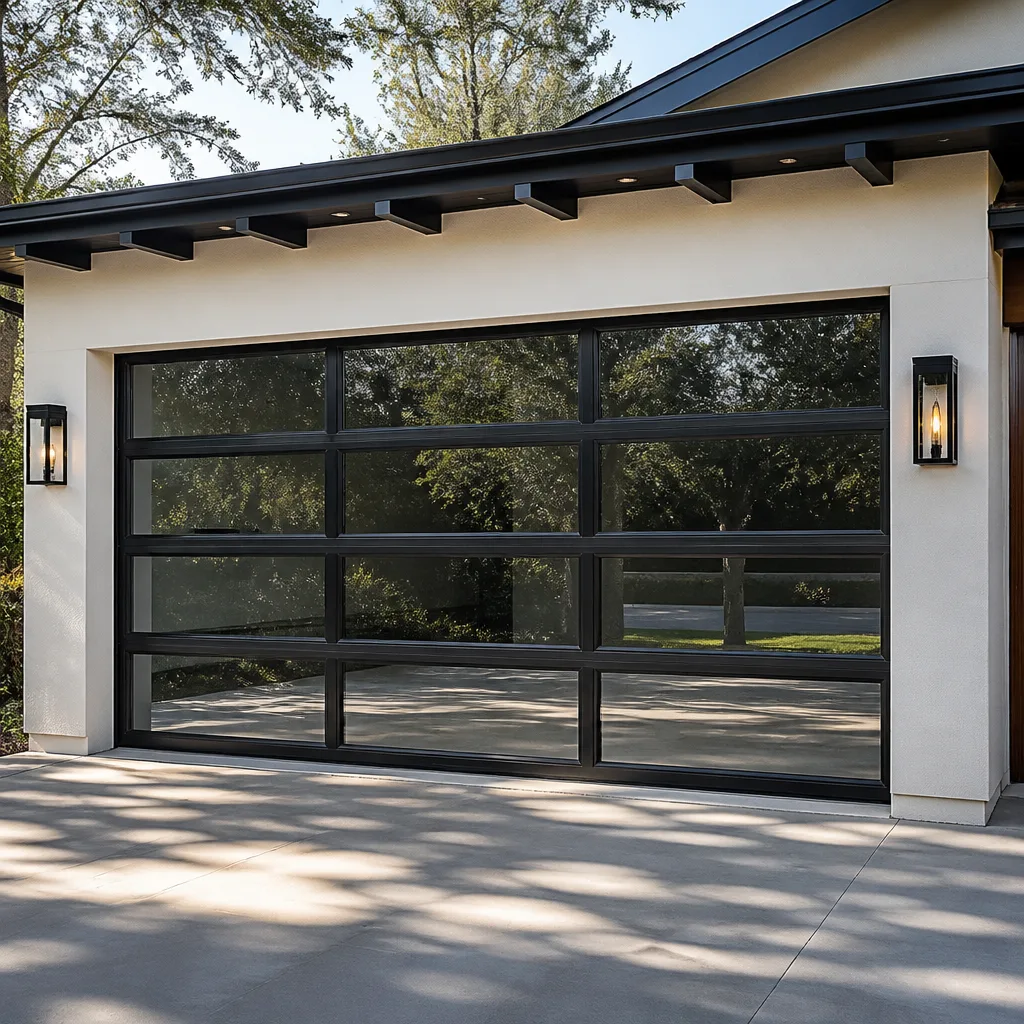 Full-view glass
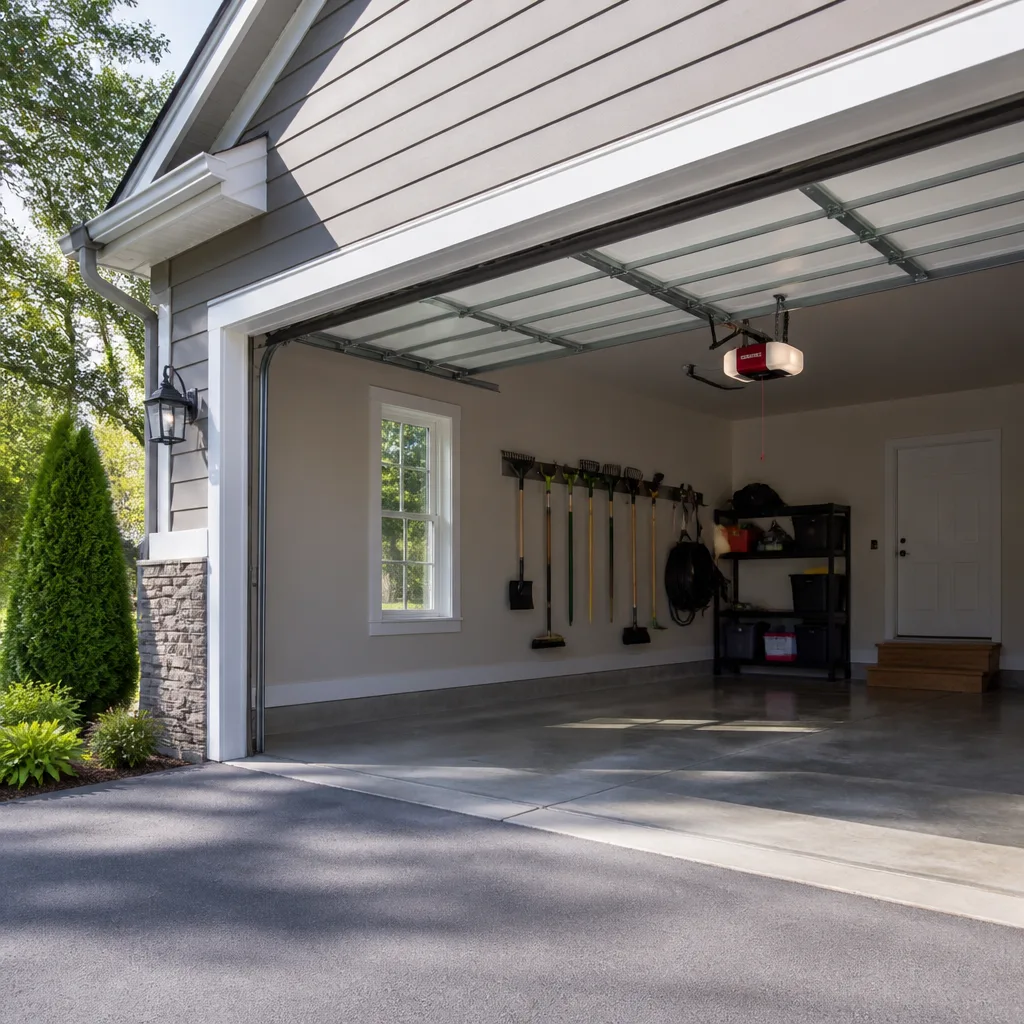 LiftMaster openers
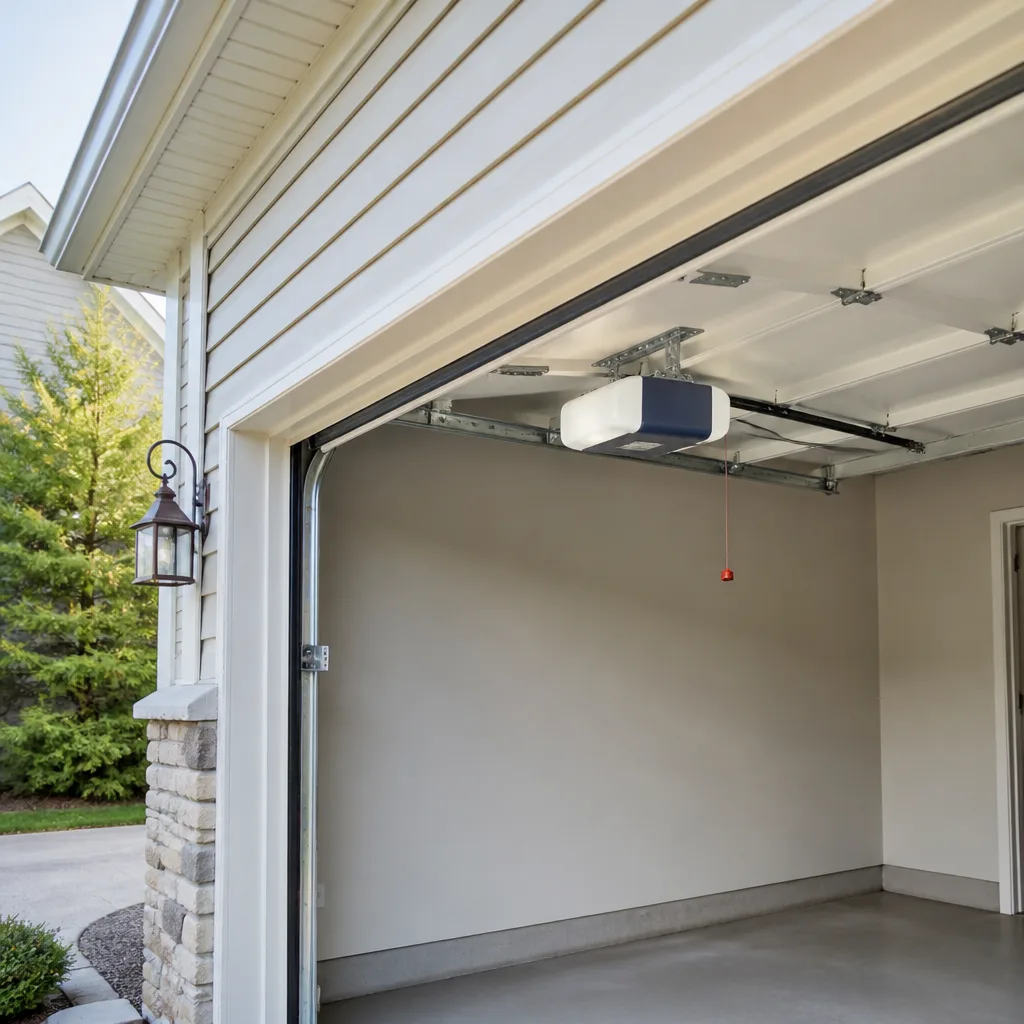 Chamberlain openers
Full 25-point door and opener safety check with every visit - springs, cables, rollers, tracks, and your LiftMaster or Chamberlain opener included
You get a price before we start. It does not change when the pro arrives.
Get your free estimateDIY vs Professional Garage Door: The El Paso Homeowner’s Decision Guide
Most DIY garage door advice starts in the wrong place. It asks whether you’re handy enough. The better question is more specific: which jobs on a garage door can go wrong in a way that sends you to the emergency room, and which ones are genuinely fine to handle yourself on a Sunday afternoon? That split is what this guide is about. Torsion springs, cable drums, and panel replacement carry real physical risk. Lube, sensor alignment, and remote reprogramming don’t. In El Paso, the gap between those two categories is the whole decision. We’ll walk through both, then show you how to make the professional option cheaper and faster if you go that route.
Quick Answer
Handle low-risk tasks yourself: lubrication, safety sensor alignment, manual disconnect operation, and remote or keypad reprogramming. Leave torsion spring work, cable drum work, and structural panel replacement to a trained technician. Professional spring replacement and panel repair cost less than most homeowners expect, and a properly diagnosed repair usually beats a DIY attempt that ends in a second service call. For anything involving stored spring tension, call a professional.
Styles & brands we work with
- Raised-panel steel
- Carriage house
- Modern flush
- Full-view glass
- LiftMaster openers
- Chamberlain openers
Table of Contents
- Tasks That Are Genuinely Safe for a Prepared DIYer
- Tasks That Carry Documented Injury Risk
- DIY Opener Installation vs. Professional Installation in El Paso
- Sourcing Genuine OEM Parts in El Paso’s Desert Conditions
- Why Brand Knowledge Changes the Math
- What to Have Ready Before a Technician Arrives
- How El Paso’s Climate Affects Your Door
- Common Mistakes to Avoid
Tasks That Are Genuinely Safe for a Prepared DIYer
Some garage door maintenance carries no meaningful risk if you follow the manufacturer’s instructions and use basic precautions. These are the jobs where DIY makes sense and won’t cost you more than the parts.
Here’s what you can handle on your own:
- Lubrication. Apply a garage-door-specific lubricant to hinges, rollers, and the torsion bar bearings (not the spring coils themselves). A dry silicone or lithium spray works better than WD-40 in El Paso’s dusty conditions, because it doesn’t attract grit.
- Safety sensor alignment. The photoelectric sensors mounted near the floor should point at each other with their indicator lights steady. If one blinks, realign it until both are solid. This is a two-minute fix with a screwdriver.
- Manual disconnect operation. The red pull handle on the opener trolley lets you open the door by hand during a power outage. Test it once a month so you know the release works. Reconnect by pulling the door up until the trolley clicks back in.
- Remote and keypad reprogramming. Whether you have a LiftMaster, Chamberlain, Genie, or Craftsman opener, the programming sequence lives in your owner’s manual or on the brand’s support page. It’s a button-press sequence, not a repair.
- Visual inspection. Look at the springs, cables, and rollers once a month. Note fraying cables, stretched springs, or wobbling rollers. You don’t need to fix them yourself, but catching them early shortens the eventual repair.
None of these tasks put your hands near stored tension or overhead weight. That’s the dividing line. If a task requires you to loosen a bolt that holds a spring, a cable, or a panel, stop and call a professional.
Tasks That Carry Documented Injury Risk
Torsion springs store enough energy to cause permanent injury when released improperly. Hospital emergency records document spring-related hand and eye injuries every year from homeowners who watched a tutorial and thought they understood the procedure. The tutorial shows the steps. It doesn’t show you the condition of your spring, your winding cone, or whether the previous technician torqued it correctly.
These are the tasks that should never be DIY:
- Torsion spring replacement or adjustment. A torsion spring is wound to a specific number of turns under tension. Loosening the set screws without the proper winding bars and technique can release that energy into your hands or face. This is the single most dangerous job on a garage door.
- Extension spring replacement. Extension springs run along the horizontal tracks and stretch under load. They fail violently when released, and they need safety cables installed correctly to contain a break. Don’t attempt this without training.
- Cable drum unwinding. The cables running from the drums to the bottom brackets are under spring tension even when the door is down. Cutting or loosening a cable without releasing the spring tension first can snap the cable across your body.
- Structural panel replacement. Replacing a bent or cracked section means the door loses its structural integrity during the swap. A door that’s out of balance can drop. Panel replacement also requires knowing the exact model and gauge, which brings us to the parts problem.
- Track realignment after impact. A car bumper denting a track looks like a hammer-and-pliers job. It isn’t. A misaligned track binds the door and puts uneven load on the springs, which is where failures start.
The common thread is stored energy. Springs, cables, and a raised door all hold energy. A trained technician knows how to release it safely. The cost of a professional repair is far lower than the cost of a hand injury, and it’s also lower than the cost of a door that falls on a car because a spring was wound wrong. For garage door repair involving springs or cables, don’t do it yourself.
DIY Opener Installation vs. Professional Installation in El Paso
Opener installation sits in a gray zone. Unlike spring work, the injury risk is lower. The practical risk is different: mounting, wiring, and calibration go wrong in ways that cost more to fix than the install itself.
Here’s the honest math for El Paso homes:
- Ceiling height and framing. Many El Paso homes, especially in older neighborhoods near Five Points and the Lower Valley, have garage ceilings under eight feet or exposed framing that isn’t perfectly level. Opener rails need a level mount, and shimming a rail on uneven framing is more fiddly than a tutorial suggests.
- Electrical. Most openers need an outlet near the ceiling. If your garage doesn’t have one, you’ll need an electrician, which turns a one-trade job into two. Running new wiring is not a DIY-friendly task.
- Stucco and header mounting. El Paso’s stucco exteriors are common, and the header above the garage opening is where the rail brackets attach. Drilling into stucco without hitting the framing behind it is a real risk on a DIY install, and a bracket anchored to stucco alone won’t hold.
- Calibration. The opener’s travel limits and force settings have to match the door. Off by a little, and the door reverses or slams. Off by a lot, and the safety reverse fails to stop the door on contact.
Professional installation covers the opener and the door in one visit. A technician mounts the rail level, wires it safely, calibrates travel and force, and tests the safety reverse. That’s the single-visit advantage of working with one team for the whole system. If you’re installing a new opener, schedule a free measure and a written price rather than expecting same-day work, because installation is ordered and scheduled. For opener problems on an existing unit, garage door opener repair is usually faster and cheaper than replacing the opener entirely.
Sourcing Genuine OEM Parts in El Paso’s Desert Conditions
El Paso’s dust is the variable most out-of-town guides ignore. Fine desert dust works into bearings, rollers, and the pivots on hinges. The wrong replacement part doesn’t just fit poorly – it wears faster because it wasn’t built for grit.
That matters most for bearings and rollers. An OEM bearing from the door or opener manufacturer is sealed and rated for the load. A cheap Amazon substitute often has looser tolerances and thinner seals. In a dusty climate like ours, that looser seal lets grit in faster, and the bearing fails in a fraction of the time. You save a few dollars on the part and pay for the repair twice.
How to source genuine parts:
- Start with the nameplate. Every door and opener has a model and serial number. Write both down before you search. The exact model matters for hinges, rollers, and spring sizing.
- Buy from the manufacturer or an authorized distributor. Big-box stores carry common sizes but not always the right spring or bearing for your model. Ordering through an authorized channel gets you the OEM part, not a lookalike.
- Match the spring rating exactly. Springs are rated by wire gauge, inside diameter, and length. A spring with the same color code can still have a different cycle life. A local technician confirms the rating before installing, which is one reason a written estimate lists the part spec.
- Check the seal on bearings and rollers. If you’re replacing a roller yourself, look for a sealed bearing. An open roller in El Paso dust will grind within months.
Genuine parts cost a little more. Over the life of the door, they cost less. When we replace a spring or roller, we source the part that matches your door’s rating rather than a one-size substitute.
Why Brand Knowledge Changes the Math
A DIY install or repair goes wrong most often when the homeowner doesn’t know the specific system. A Wayne Dalton door with TorqueMaster springs works differently than an Amarr or Clopay door with standard torsion springs. A Craftsman opener’s programming is different from a LiftMaster’s, even though the two brands share engineering. Knowing the brand before you start changes what tools, parts, and steps you need.
We work across eight major brands: LiftMaster, Chamberlain, Genie, Clopay, Amarr, Wayne Dalton, Craftsman, and Raynor. That covers the overwhelming majority of doors and openers found in El Paso homes. It means a technician can diagnose your specific system on the first visit instead of guessing, and it means the recommendation is based on what your system needs, not on a brand incentive. That’s what “the right fix for what you already have” means in practice.
For a homeowner weighing DIY, brand knowledge cuts both ways. On a familiar brand with a manual in hand, a sensor fix or remote reprogram is genuinely doable. On an unfamiliar brand with a non-standard spring setup, the same repair can go sideways fast. Our technicians have up to 8 years of experience across these systems, and part of that experience is knowing when a door’s design makes DIY a bad bet.
What to Have Ready Before a Technician Arrives
The fastest way to cut a service visit short is to have the right information ready before the technician reaches your door. It’s not about being demanding – it’s about letting the diagnosis start at step one instead of step five. Here’s what to gather:
- Nameplate info. Note the model and serial number from both the door and the opener. They’re usually on a sticker on the door jamb and on the opener’s motor housing. A photo on your phone works.
- Symptom log. Write down what the door does and when. Does it reverse on the way down? Stop halfway? Grind, squeak, or bang? Does the opener light flash a certain number of times? That count is often a diagnostic code.
- Power cycle results. Unplug the opener for a minute, plug it back in, and note whether the door behaves differently. If it does, mention that – it narrows the diagnosis toward the control board or a remote issue.
- Recent changes. New remote? New battery? A recent power surge or storm? Anything that changed before the problem started is a clue.
- Obstruction check. Confirm nothing is blocking the sensor beam and nothing is jammed in the track. Sometimes the “broken door” is a kid’s toy or a shifted box.
With that information ready, a technician can confirm the fix on the first visit and give you a written estimate before any work starts. That saves you the back-and-forth, and it means the price you’re quoted is the price you pay. We answer 24/7 for scheduling and questions.
How El Paso’s Climate Affects Your Door
El Paso’s dry desert air and summer heat put specific stress on garage door components. Understanding that stress helps you decide which tasks are routine and which need a technician.
- Dust and grit. The fine dust that settles everywhere works into bearings, rollers, and hinge pivots. Sealed bearings and regular lubrication matter more here than in a humid climate. If you skip lubrication for a year, the rollers start to grind.
- Heat and spring fatigue. Metal expands and contracts with the daily temperature swing. Springs work harder in the summer heat, and a fatigued spring is a spring that’s closer to breaking. If your door suddenly feels heavier or the opener strains, that’s a spring issue, not a door issue.
- Sun and panel wear. Paint fades faster in strong sun, and the steel under a faded spot can start to corrode. A little touch-up on a chipped panel is a safe DIY task that keeps the door going longer.
- Wind and dust storms. When the wind kicks up, grit gets into tracks and rollers faster. A quick wipe-down of the tracks and a relube after a windy spell keeps things smooth.
El Paso’s mild winters mean you’re not fighting freeze-thaw damage, but the summers mean springs and bearings see more wear. That’s why catching a worn part early is worth the effort. A short visual inspection once a month, plus a yearly relube, covers most of what a homeowner can do safely.
Common Mistakes to Avoid
- Using WD-40 on the tracks and springs. It’s a solvent, not a lubricant. It strips the factory grease and attracts dust, which makes the door louder over time. Use a dry silicone or lithium spray instead.
- Adjusting a torsion spring without winding bars. A pair of screwdrivers or pliers isn’t a substitute. The spring can snap the tool back into your face. This is the classic shortcut that ends in an ER visit.
- Disconnecting the opener by pulling the red cord while the door is up. The door can drop. Always lower the door to the ground before you release the trolley.
- Buying a universal spring because it looks close. Springs are rated by wire gauge, inside diameter, length, and cycle life. A near-match that isn’t the right rating will fail early or unbalance the door.
- Anchoring an opener rail to stucco alone. Common in El Paso homes with stucco exteriors. The bracket has to hit the framing behind it, or it will pull free. Check what’s behind the stucco before drilling.
- Skipping the sensor alignment after a bump. A sensor knocked slightly out of line blinks a fault and stops the door. A two-minute realign is easier than a service call.
- Trying to fix a bent track with a hammer. You’ll bend it in a different direction and strain the door’s balance. Track realignment is a technician job because the door has to be put in a safe position first.
See the difference
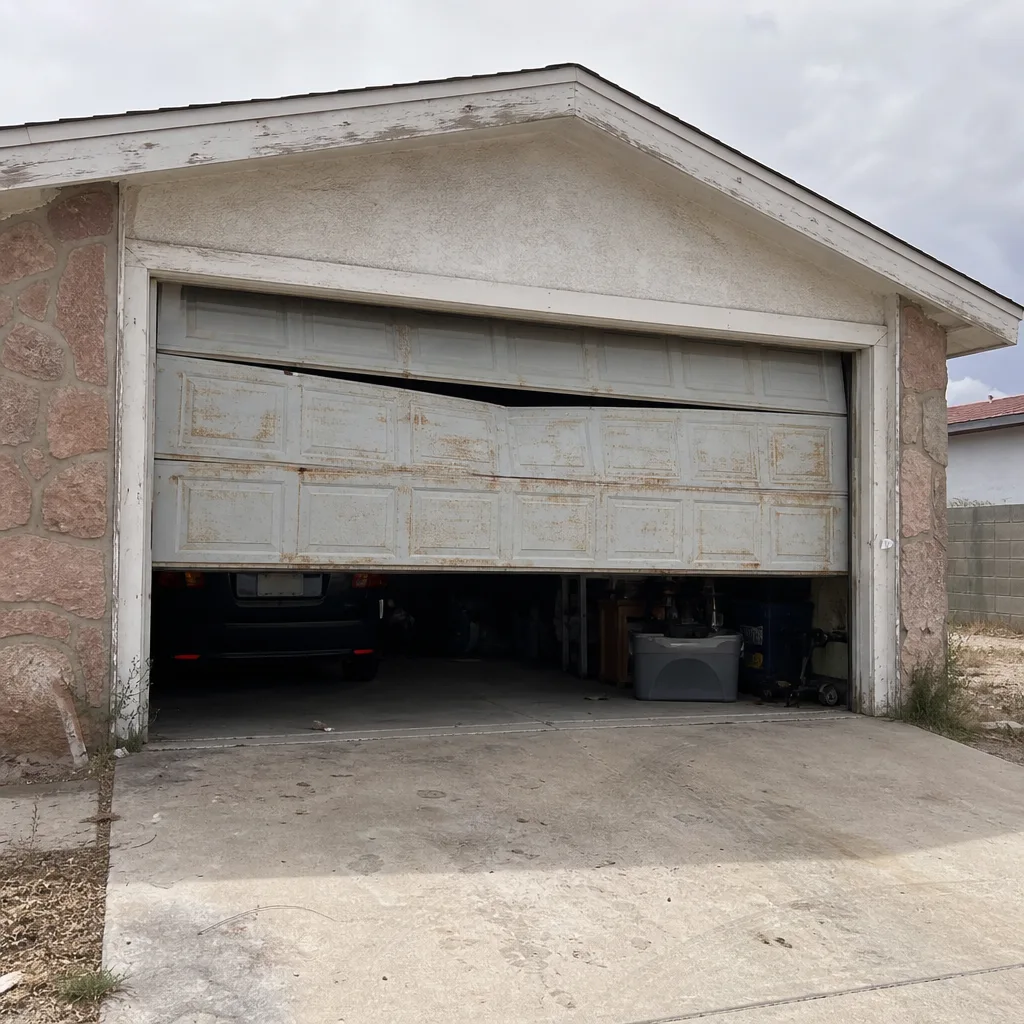 Before
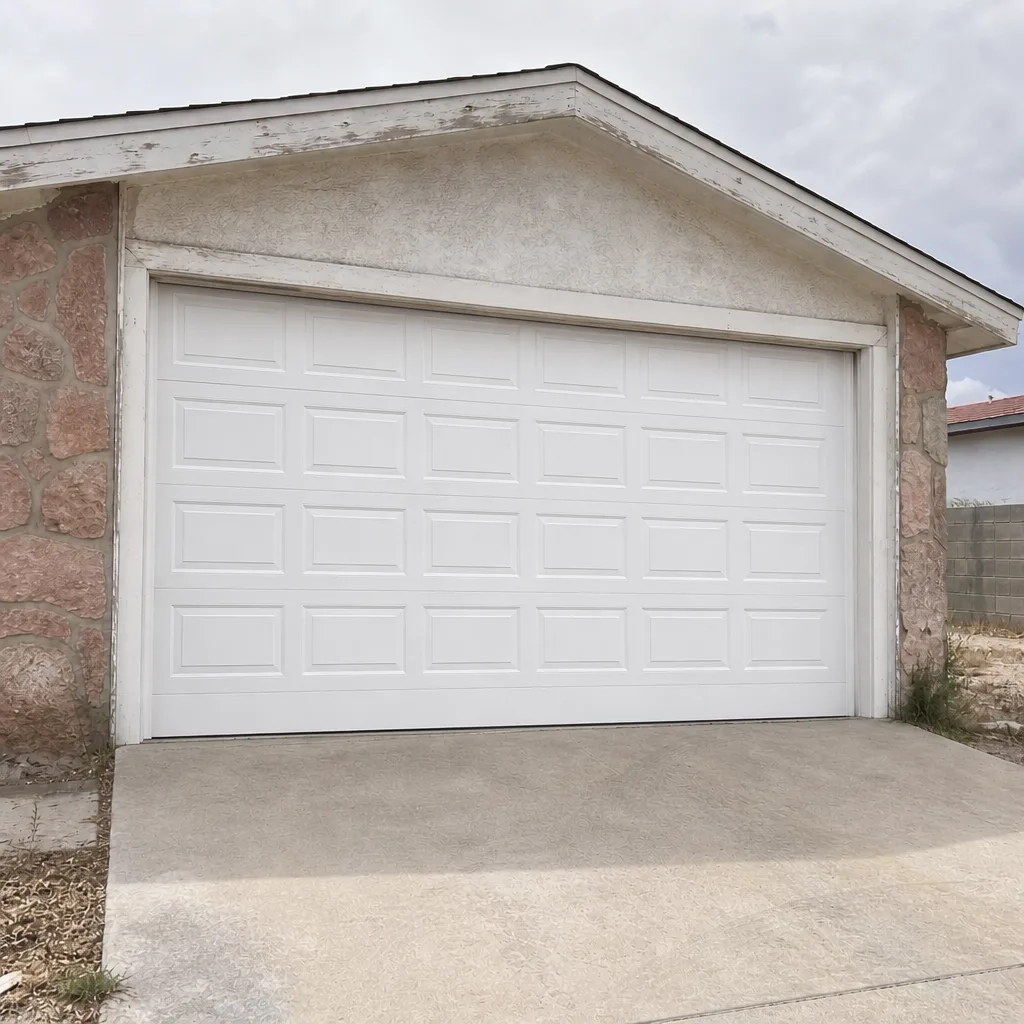 After
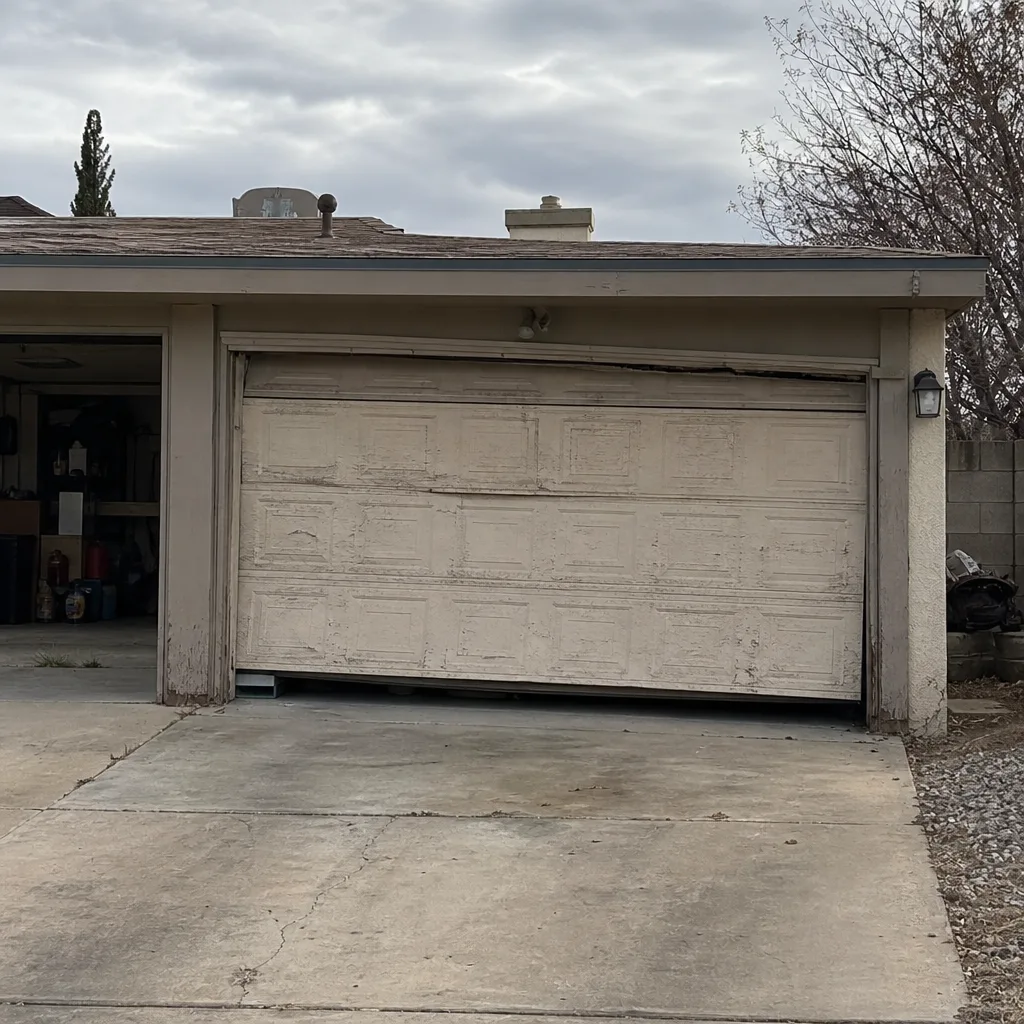 Before
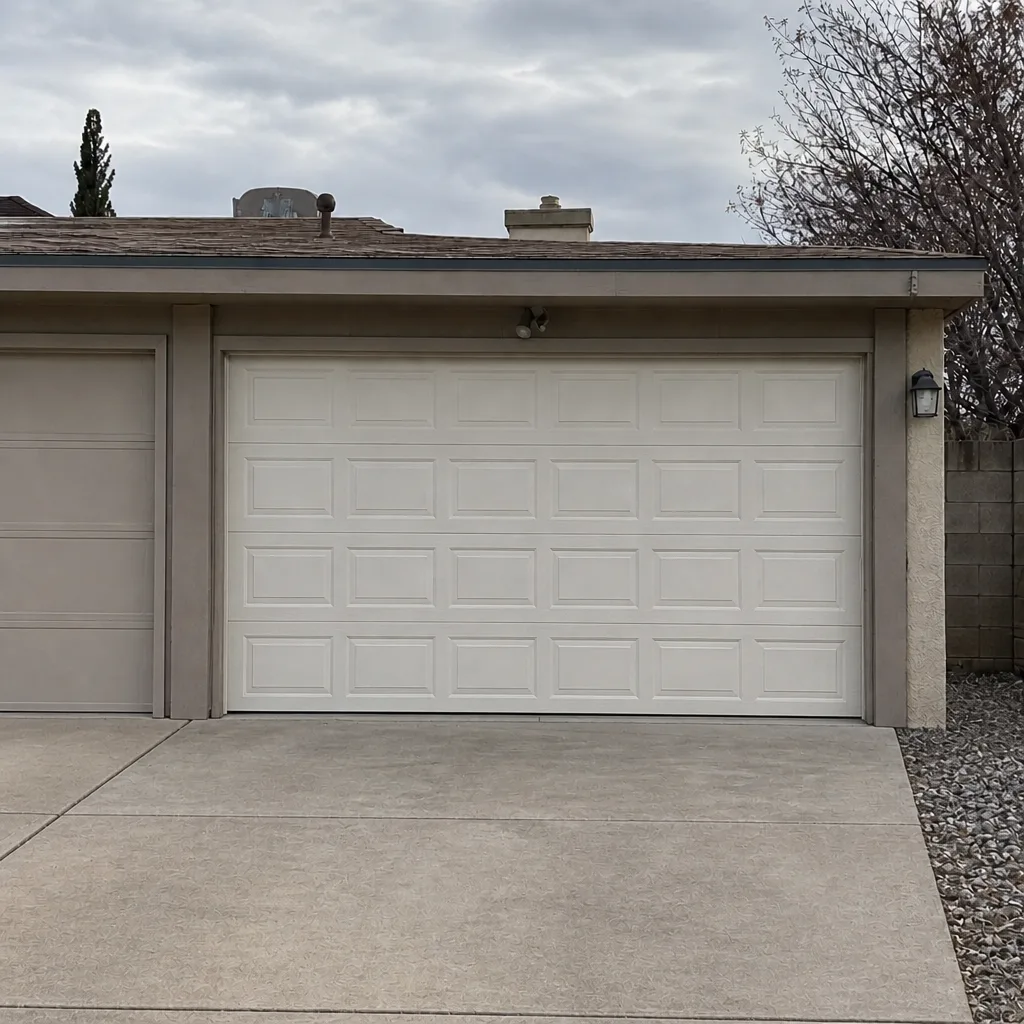 After
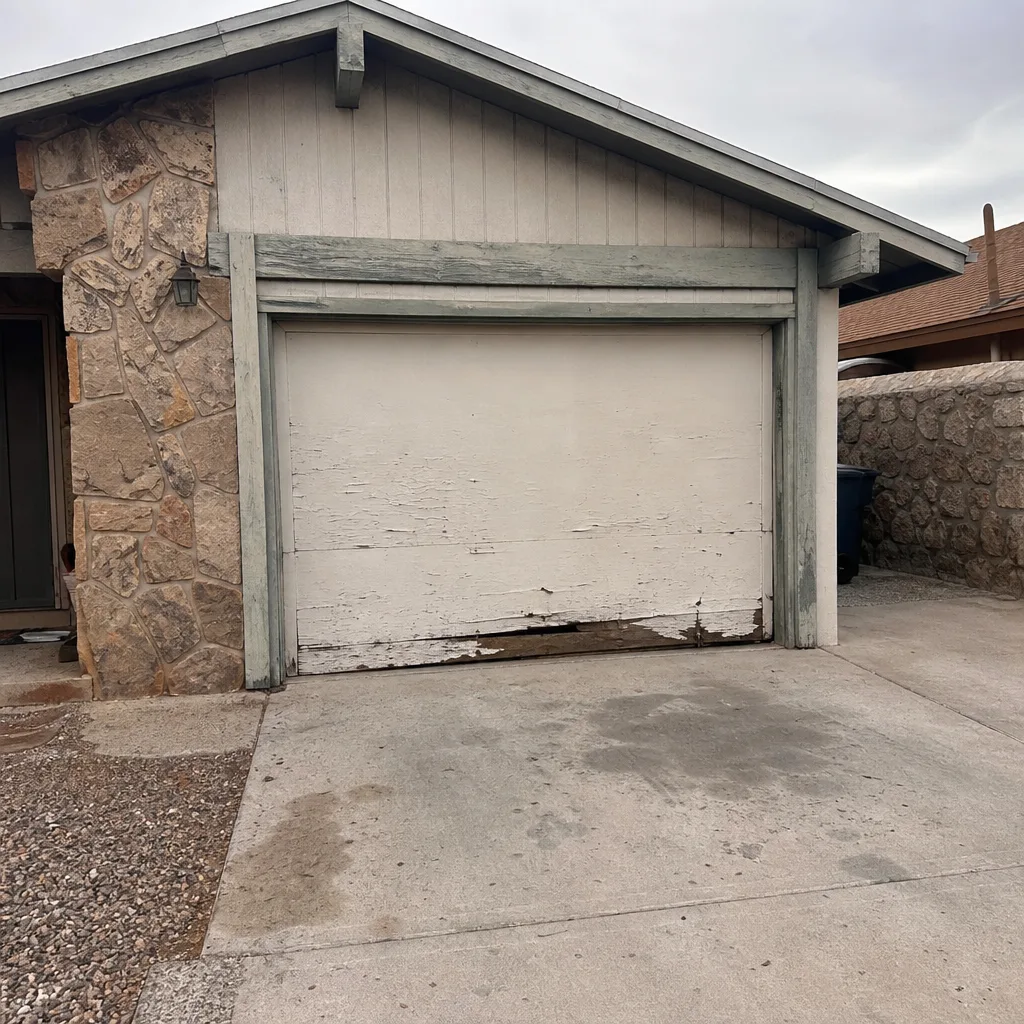 Before
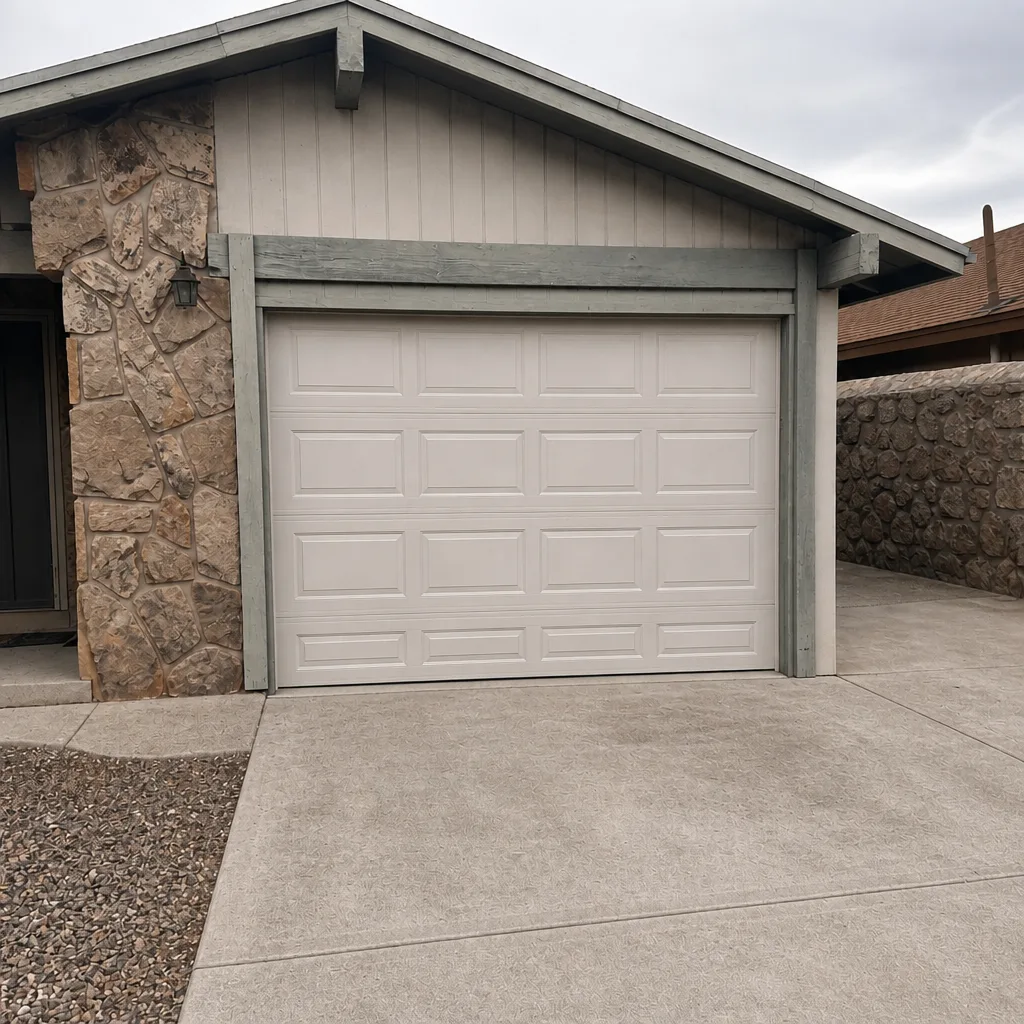 After
When to Call a Professional
Call a professional when the job touches stored spring tension, cable tension, structural panels, track realignment after impact, or opener wiring and calibration. That covers most repairs. Also call if you’ve tried a safe DIY fix and the door still misbehaves, because a symptom that doesn’t clear often points to a part that’s failing rather than a setting that’s off. On the cost side, get the estimate before you decide. For repair and opener work, we offer same-day service with fast dispatch from 7am to 7pm, and we quote the price and agree on it before any work starts. For installation, we schedule a free measure and a written price. El Paso Garage Door Service offers free estimates in El Paso – call (833) 345-7126. We answer 24/7. Fast dispatch from 7am to 7pm, Sunday through Friday.
Frequently Asked Questions
You shouldn’t. Torsion and extension springs store enough energy to cause permanent injury when released improperly, and that energy is present even when the door is down. A trained technician uses winding bars and the correct procedure to release and rewound the spring safely. Call (833) 345-7126 for a free estimate on spring repair.
Most safe DIY tasks cost the price of parts and an hour of your time. Professional repair cost depends on the part and the job, and it’s set per job by the written estimate before work starts. The written quote is the price, so you can compare it against the parts cost of a DIY attempt that might need a second service call. Call (833) 345-7126 for an exact quote – estimates are free.
It’s possible but not usually worth it. The injury risk is lower than spring work, but the install requires a level rail mount, an electrical outlet near the ceiling, brackets anchored into framing behind the stucco, and calibration of travel and force settings. A professional install covers the opener and the door in one scheduled visit. Call (833) 345-7126 to book a free measure and a written price.
Lubrication, safety sensor alignment, manual disconnect testing, remote and keypad reprogramming, visual inspection, and touch-up paint on a chipped panel. None of these put your hands near spring tension or overhead weight, so they’re fine to handle on your own. Anything that involves loosening a bolt holding a spring, cable, or panel should go to a technician.
Estimates are free. The price for the work is quoted and agreed before any work starts, and the written estimate sets the final price. We don’t give a price over the phone for a repair we haven’t seen, because the part and the labor depend on the diagnosis. Call (833) 345-7126 for a free estimate.
We’re closed Saturday, and we open Sunday through Friday, 7am to 7pm. Call (833) 345-7126 and we’ll book you into the next opening, Sunday through Friday. We answer 24/7. Between now and then, use the red manual disconnect to open and close the door by hand.
Yes. The technicians who perform the work are state-licensed and insured. We ask about the specific system, whether it’s a LiftMaster, Chamberlain, Genie, Craftsman, Clopay, Amarr, Wayne Dalton, or Raynor, because knowing the brand cuts the diagnosis time. Call (833) 345-7126 for a free estimate.
The Bottom Line
The DIY vs professional decision comes down to stored energy, not skill. Lube, sensor alignment, disconnect testing, and remote programming are safe and worth doing yourself. Torsion springs, extension springs, cable drums, and panel swaps are not, because the failure mode is injury. Opener installation sits in the middle: possible to DIY, usually more expensive than it looks once you hit framing, wiring, or calibration problems. The professional option in El Paso is more accessible than most homeowners assume, with free estimates and a written price agreed before work starts. When in doubt, El Paso Garage Door Service handles the door and the opener together so the problem gets diagnosed once.
Call (833) 345-7126 for a free estimate. We answer 24/7. Fast dispatch from 7am to 7pm, Sunday through Friday.
Written by the team at El Paso Garage Door Service.